Transporting large equipment, machinery, construction materials, and industrial cargo requires careful planning. When a truck or its load is larger than the standard legal limits, the carrier may need special permission before traveling on public roads.
This permission is commonly called an oversize permit or oversized load permit.
An oversize permit allows a commercial vehicle to transport a load that exceeds the normal legal limits for dimensions such as width, height, or length. Depending on the size and type of load, the permit may also include requirements for the route, travel hours, warning signs, lighting, escort vehicles, and other safety measures.
The rules are different across the United States and Canada. A load that is legal in one state or province may require a permit in another. If a shipment travels through several jurisdictions, the carrier may need to obtain permits for each part of the route.
Understanding when an oversize permit is required can help trucking companies avoid fines, delays, and other compliance problems.
What Is an Oversize Permit?
An oversize permit is a legal authorization issued by a transportation authority that allows a truck to move a load exceeding the standard size limits.
Normally, commercial vehicles must stay within established limits for:
- Width
- Height
- Length
- Weight
When a vehicle or load exceeds one or more applicable limits, the carrier may need special authorization.
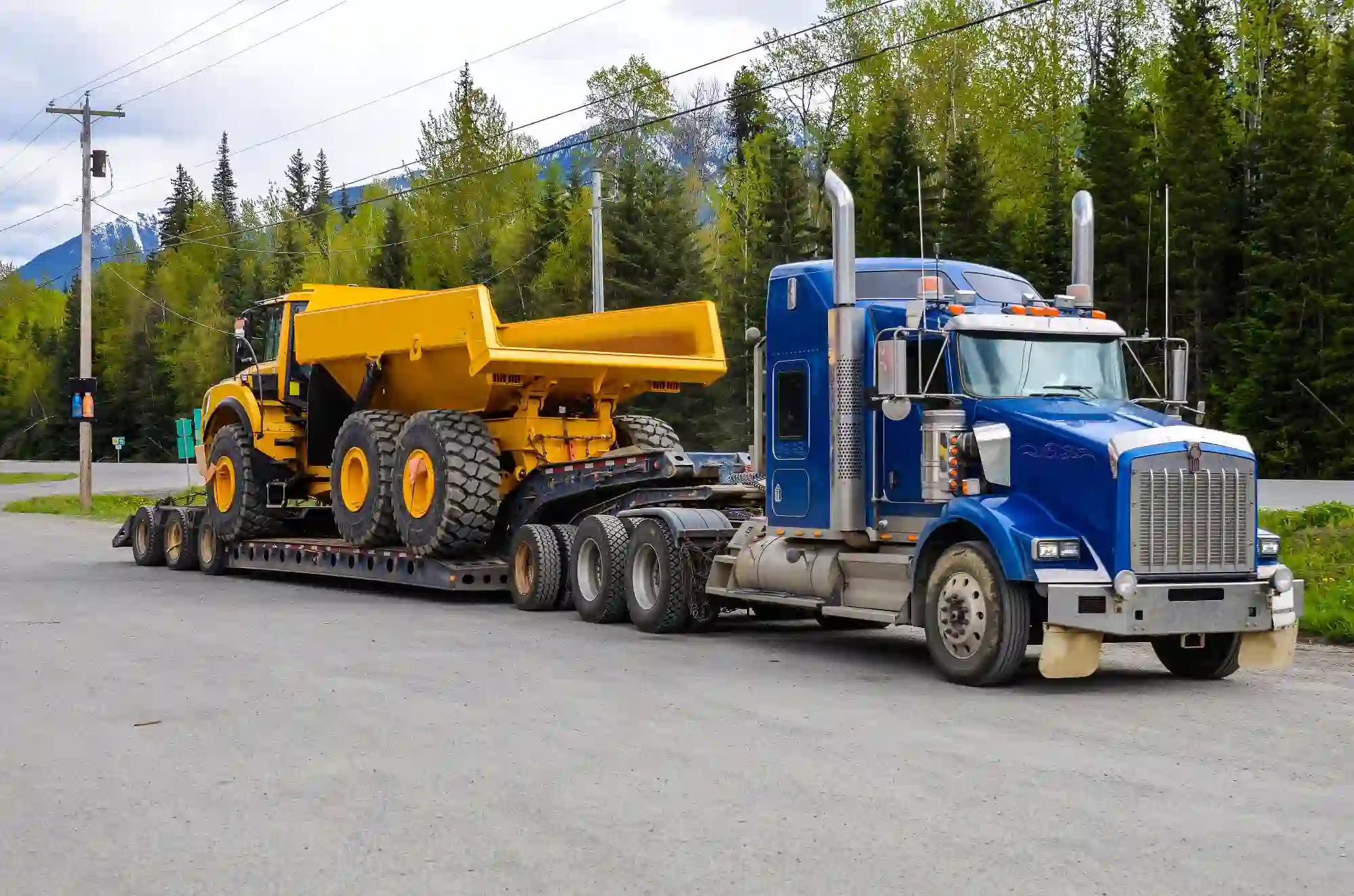
For example, imagine a trucking company needs to transport a large excavator from one construction site to another. The excavator may make the total vehicle width greater than the standard legal limit. Instead of transporting it without authorization, the carrier can apply for an oversize permit.
The permit tells the carrier under what conditions the load can legally travel.
Depending on the jurisdiction, an oversize permit may specify:
- Approved route
- Travel dates
- Travel times
- Maximum dimensions
- Maximum weight
- Required signs
- Warning lights
- Escort requirements
- Speed restrictions
- Other safety conditions
An oversize permit is therefore more than just a document. It provides specific operating conditions for moving a load that falls outside normal highway limits.
When Do You Need an Oversize Permit?
You generally need an oversize permit when your truck or load exceeds the legal dimensional limits established by the state, province, or territory where you are traveling.
The most common reasons include excessive:
- Width
- Height
- Length
Weight is usually handled through an overweight permit, although some jurisdictions issue permits that cover both size and weight.
Because regulations differ, carriers should never assume that one set of limits applies everywhere.
A truck traveling across several states or provinces should check the requirements for every jurisdiction on its route.
When Is a Truck Too Wide?
Excessive width is one of the most common reasons for obtaining an oversize permit.
Large equipment and industrial cargo can extend beyond normal width limits. Examples include:
- Excavators
- Bulldozers
- Cranes
- Agricultural machinery
- Large tanks
- Industrial equipment
- Construction materials
- Manufacturing components
A wide load can affect traffic lanes and make it more difficult for the driver to safely navigate curves, intersections, and narrow roads.
For this reason, the transportation authority may impose special conditions on the movement.
When Is a Truck Too Tall?
A load can also require an oversize permit because of its height.
Tall loads require special attention because of possible obstacles along the route, including:
- Bridges
- Overpasses
- Tunnels
- Utility lines
- Traffic signals
- Road signs
A route that looks suitable on a map may not be safe for a very tall load.
For this reason, carriers should measure the total loaded height, not just the height of the cargo.
Route planning is especially important when transporting tall equipment.
When Is a Truck Too Long?
Length can also determine whether a permit is required.
Long loads can create challenges when:
- Turning at intersections
- Entering or leaving highways
- Navigating curves
- Changing lanes
- Traveling through urban areas
A permit authority may require the carrier to follow a specific route or operate only during certain hours.
Is an Oversize Permit the Same as an Overweight Permit?
No. Oversize and overweight permits address different compliance issues.
An oversize permit generally applies when a vehicle or load exceeds legal dimensional limits, such as width, height, or length.
An overweight permit generally applies when the vehicle exceeds the legal weight limit.
However, one shipment can be both oversized and overweight.
For example, a large piece of industrial machinery may be:
- Too wide
- Too tall
- Too heavy
In this situation, the carrier may need authorization covering multiple restrictions.
The exact process depends on the state, province, or territory involved.
Who Needs an Oversize Permit?
Oversize permits are commonly needed by companies transporting large or specialized cargo.
Heavy Haul Carriers
Heavy haul companies frequently transport large machinery, industrial equipment, and construction equipment that exceeds standard highway dimensions.
Construction Companies
Construction companies may need permits when moving:
- Excavators
- Cranes
- Loaders
- Bulldozers
- Concrete equipment
- Other large machinery
Agricultural Businesses
Large farm equipment can exceed standard road dimensions. Agricultural businesses may therefore need special permits when moving equipment between farms, dealers, storage facilities, or other locations.
Manufacturing Companies
Manufacturers may transport large machinery, tanks, generators, structural components, and other oversized products.
Energy and Industrial Companies
Large industrial and energy projects often involve components that cannot be transported using standard commercial vehicles.
Freight and Logistics Companies
Transportation companies may arrange oversized shipments for customers and coordinate the permits required for the complete route.
What Information Is Needed for an Oversize Permit?
Permit applications generally require accurate information about the carrier, truck, load, and route.
Depending on the jurisdiction, you may need:
- Carrier name and information
- Vehicle registration information
- Vehicle identification number
- Truck and trailer details
- Load description
- Overall loaded width
- Overall loaded height
- Overall loaded length
- Gross vehicle weight
- Axle weights
- Number of axles
- Axle spacing
- Origin
- Destination
- Proposed route
- Travel dates
Some applications may require additional documents depending on the size and type of load.
Accurate measurements are extremely important. If the dimensions on the application are incorrect, the permit may not match the actual load.
How Do You Get an Oversize Permit?
The application process varies between jurisdictions, but the general steps are similar.
Step 1: Measure the Complete Load
Start by determining the exact dimensions of the loaded vehicle.
Measure:
- Width
- Height
- Length
- Gross weight
- Axle weights
- Axle spacing
The measurements should represent the actual configuration that will travel on the road.
Step 2: Identify Every Jurisdiction
Determine all states, provinces, and territories included in your route.
This is particularly important for interstate and cross-border transportation.
Step 3: Check Local Requirements
Review the oversize and overweight requirements for each jurisdiction.
Do not assume that a permit from one state or province automatically applies elsewhere.
Step 4: Plan the Route
Route planning is one of the most important parts of oversized transportation.
The route may need to avoid:
- Low-clearance bridges
- Weight-restricted bridges
- Narrow roads
- Tunnels
- Sharp turns
- Construction zones
- Restricted highways
- Areas with other transportation limitations
Some jurisdictions may specify or approve the route as part of the permit.
Step 5: Submit the Permit Application
Provide the required carrier, vehicle, cargo, dimension, weight, and route information to the appropriate authority.
Step 6: Pay the Permit Fee
Permit costs vary depending on the jurisdiction and characteristics of the shipment.
Step 7: Review the Approved Permit
Before beginning the trip, check all permit conditions.
Pay attention to:
- Valid dates
- Approved route
- Travel hours
- Maximum dimensions
- Escort requirements
- Warning signs
- Lighting requirements
- Other restrictions
Step 8: Keep the Permit Available During the Trip
The driver should have the required permit documentation available while transporting the load.
Oversize Permit Requirements in the USA
In the United States, oversize and overweight permits are generally handled at the state level.
This means requirements can vary significantly between states.
A carrier traveling from one state to another may need to obtain separate permits for each state where the load exceeds the applicable limits.
Requirements can include:
- Maximum dimensions
- Maximum permitted weight
- Approved routes
- Travel times
- Holiday restrictions
- Escort requirements
- Warning signs
- Lighting
- Safety equipment
Because each state can have its own requirements, route planning should be completed before the shipment begins.
Oversize Permit Requirements in Canada
Canada also regulates oversized and overweight transportation through provincial and territorial authorities.
Carriers may need special authorization when transporting loads that exceed applicable provincial or territorial limits.
Requirements can cover:
- Vehicle dimensions
- Weight
- Axle configuration
- Route
- Travel times
- Escort vehicles
- Warning equipment
- Safety conditions
A carrier traveling between provinces should review the requirements for every province or territory included in the trip.
Do You Need an Oversize Permit for Cross-Border Transportation?
Cross-border transportation can require additional planning.
For example, a carrier transporting an oversized load from the United States into Canada may need to satisfy the requirements of the jurisdictions on both sides of the border.
The carrier should review:
- The origin jurisdiction
- The destination jurisdiction
- Every jurisdiction along the route
- Border crossing requirements
- Oversize and overweight requirements
- Escort requirements
- Route restrictions
Getting the permits arranged before the trip can help prevent delays at the border or during transportation.
How Much Does an Oversize Permit Cost?
There is no single price for an oversize permit.
Costs can depend on:
- State or province
- Load dimensions
- Gross weight
- Number of jurisdictions
- Travel distance
- Permit duration
- Route requirements
- Escort requirements
- Special engineering reviews
A simple permit may have a relatively low fee, while a complex heavy-haul movement can involve substantially higher costs.
Carriers should also consider additional expenses such as:
- Pilot cars
- Police escorts
- Route surveys
- Bridge analysis
- Engineering reviews
- Special equipment
- Administrative fees
Therefore, the permit fee should be treated as one part of the total cost of moving an oversized load.
Are Escort Vehicles Required?
Not every oversized load requires an escort vehicle.
Escort requirements depend on the size of the load and the rules of the jurisdiction.
Factors may include:
- Width
- Length
- Height
- Route
- Traffic conditions
- Local regulations
Some jurisdictions require one or more pilot cars once a load reaches certain dimensions.
If an escort is required, the escort vehicle may need specific signs, lights, communication equipment, or other safety equipment.
The permit should clearly identify any escort requirements.
What Happens If You Move an Oversized Load Without a Permit?
Moving an oversized load without the required permit can create serious compliance problems.
Possible consequences include:
- Fines
- Delays
- Vehicle detention
- Shipment delays
- Additional transportation costs
- Enforcement action
- Requirement to obtain a permit before continuing
For a commercial carrier, a delay can also affect delivery schedules and customer relationships.
Obtaining the correct permit before starting the trip is generally much safer than trying to resolve a permit problem after the truck is already on the road.
Common Oversize Permit Mistakes
Using Incorrect Measurements
Incorrect width, height, length, or weight information can lead to an incorrect permit.
Forgetting a Jurisdiction
A multi-state or multi-province route may require permits from several authorities.
Ignoring Route Restrictions
A permit may authorize a specific route. Taking a different road can violate the permit conditions.
Applying Too Late
Some permits are simple, while complicated loads may require additional review.
Forgetting Permit Expiration Dates
Many permits are valid only for specific dates or periods.
Ignoring Escort Requirements
If pilot cars or escorts are required, they should be arranged before the trip.
How Can Professional Permit Services Help?
Obtaining permits can become complicated when a shipment crosses several states or provinces.
Professional oversize permit services can help carriers manage the administrative side of the process.
Depending on the service provider, assistance may include:
- Determining required permits
- Reviewing load information
- Preparing applications
- Coordinating permits
- Checking route requirements
- Managing documentation
- Monitoring permit conditions
- Helping reduce application errors
This can be particularly useful for carriers that frequently transport oversized or specialized loads.
Frequently Asked Questions
What is an oversize permit?
An oversize permit is official authorization that allows a commercial vehicle to transport a load exceeding normal legal size limits.
When do you need an oversize permit?
You generally need one when your truck or load exceeds the applicable legal limits for width, height, or length. Requirements vary by jurisdiction.
Is an oversize permit required in every state?
Not necessarily. Requirements depend on the dimensions of the load and the specific state. If your load is oversized in multiple states, you may need permits from each applicable state.
Do Canadian provinces require oversize permits?
Yes. Provinces and territories have rules governing oversized and overweight transportation. Requirements depend on the vehicle, load, and route.
How long does an oversize permit last?
Permit validity varies. Some permits are issued for a particular trip and date, while others may have longer validity periods.
Can I get an oversize permit online?
Many jurisdictions provide online permit application systems. However, complex shipments may require additional documentation, route information, or review.
Does an oversize permit cover overweight loads?
Not always. Oversize and overweight requirements are different. Depending on the jurisdiction, you may need separate authorization or a permit covering both conditions.
Conclusion
An oversize permit is an important part of transporting large loads legally across the United States and Canada. If a truck or its cargo exceeds the applicable limits for width, height, or length, special authorization may be required before the trip begins.
The exact requirements depend on the jurisdiction, vehicle configuration, load dimensions, weight, and route. Carriers traveling through multiple states or provinces should check every jurisdiction before moving an oversized shipment.
Proper planning can help prevent fines, delays, route problems, and unnecessary transportation costs. Measuring the load accurately, identifying the required permits, planning a compliant route, and reviewing all permit conditions are essential steps for a successful oversized load trip.
If your shipment involves multiple jurisdictions or complicated dimensions, professional oversize permit assistance can make the process easier. Getting the right permits before your truck reaches the road helps keep your operation compliant and your shipment moving safely.