Transporting a wide load requires more planning than a normal trucking shipment. When cargo extends beyond the legal width allowed on a highway, the carrier may need a wide load permit, also called an oversize permit or overwidth permit.
These permits allow carriers to move loads that are too wide for normal legal transportation. However, getting a permit is not only about submitting an application. Carriers may also need to provide accurate load dimensions, vehicle information, route details, travel dates, and other documents. Depending on the size of the load, escort vehicles, route surveys, and special safety conditions may also be required.
Wide load rules are different across the United States and Canada. In the U.S., states generally control oversize and overweight permits for movements within their jurisdictions. In Canada, provinces and territories have their own requirements.
This guide explains wide load permit requirements and the application process so carriers can better prepare for an oversized shipment.
What Is a Wide Load?
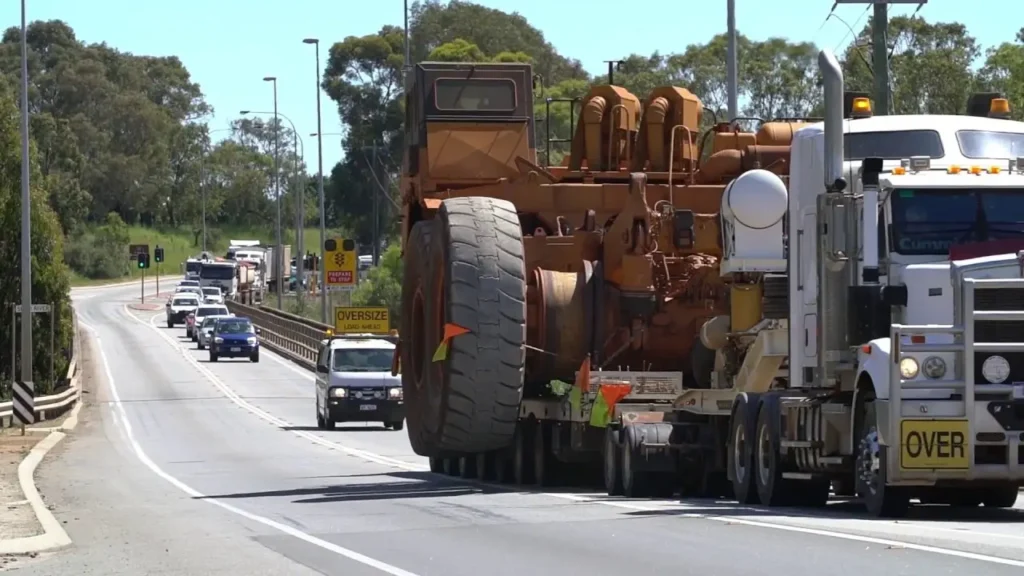
A wide load is a vehicle or cargo that exceeds the legal width allowed for travel on a particular road or jurisdiction.
A load can become wide because of:
- Machinery extending from the sides of a trailer
- Construction equipment
- Agricultural equipment
- Industrial machinery
- Large tanks
- Structural components
- Manufactured equipment
- Wind energy components
- Heavy haul equipment
The important measurement is the overall width of the vehicle and load, not simply the width of the trailer.
For commercial motor vehicles on the U.S. National Network, the federal width standard is generally 102 inches, with Hawaii having a 108-inch maximum under federal provisions. Cargo extending beyond the applicable width limit can require an overwidth permit.
However, the exact permit threshold can vary depending on the state, road, vehicle type, and route.
What Is a Wide Load Permit?
A wide load permit is special authorization that allows a carrier to move a vehicle or load that exceeds the normal legal width limit.
The permit may specify conditions such as:
- Maximum permitted width
- Approved route
- Travel dates
- Travel hours
- Escort requirements
- Warning signs
- Lighting requirements
- Speed restrictions
- Safety conditions
- Other special instructions
The carrier must follow the conditions stated on the permit.
A permit does not mean that a carrier can drive an oversized load anywhere. The approved route and other restrictions are important parts of the authorization.
When Do You Need a Wide Load Permit?
You generally need a wide load permit when your vehicle and cargo combination exceeds the applicable legal width limit.
For example, if a truck and its cargo are wider than the legal limit for the road being used, the carrier may need an overwidth permit before beginning the trip.
In the United States, the federal National Network standard is generally 102 inches, but states administer oversize permits and can have additional requirements.
In Canada, provincial rules apply.
For example, Ontario requires an oversize/overweight permit when the dimensions or weight of the vehicle and load exceed the limits established under its Highway Traffic Act. Ontario’s guide states that a single-trip permit is used for certain oversize or overweight movements along a specified route.
Because requirements vary, carriers should check every jurisdiction included in the planned route.
Wide Load Permit Requirements
Although requirements differ by state and province, a wide load permit application commonly requires detailed information about the shipment.
1. Load Width
The most important piece of information is the actual width of the load.
Measure the widest point of the complete vehicle and cargo combination.
Do not rely on an estimate.
The application may require the measurement in:
- Inches
- Feet
- Meters
For Canadian permits, metric measurements are commonly used.
The width should include any part of the cargo that extends beyond the trailer.
2. Overall Height
Even when applying for a wide load permit, authorities may need the total height of the vehicle and cargo.
This helps determine whether the proposed route contains:
- Low bridges
- Overhead signs
- Utility lines
- Traffic lights
- Railroad structures
- Tunnels
- Other clearance problems
A wide load can still become a route problem if it is also too tall.
3. Overall Length
Permit authorities may request the total length of:
- Truck
- Trailer
- Cargo
- Front overhang
- Rear overhang
Length can affect turning movements, intersections, bridges, and escort requirements.
4. Gross Vehicle Weight
The carrier may also need to provide the total weight of the vehicle and load.
This is important because a shipment can be both:
- Overwidth
- Overweight
A carrier may therefore need an oversize and overweight permit rather than a width-only permit.
5. Axle Information
Some permit applications require detailed axle information, including:
- Number of axles
- Axle spacing
- Weight per axle
- Tire information
- Trailer configuration
This information can help the permitting authority determine whether bridges and roads along the route can safely support the vehicle.
6. Origin and Destination
The permit application normally requires the starting point and final destination.
For complex movements, authorities may also require the complete route.
The route can affect:
- Bridge clearances
- Road width
- Weight restrictions
- Construction zones
- Traffic conditions
- Escort requirements
7. Vehicle Information
A carrier may need to provide:
- Truck information
- Trailer information
- License plate
- Vehicle identification information
- Registration details
- Carrier information
The exact requirements vary by jurisdiction.
Wide Load Permit Process
The application process can be different from one jurisdiction to another, but the following steps provide a useful general process.
Step 1: Measure the Complete Load
Start by measuring the actual vehicle and cargo.
Record:
- Width
- Height
- Length
- Gross weight
- Axle weights
- Axle spacing
- Front overhang
- Rear overhang
Accurate measurements are critical.
If the information on the permit does not match the actual load, the carrier can face problems during an inspection.
Ontario, for example, states that the weights and dimensions provided for project permits must be load-specific and that permit conditions are based on the information supplied by the applicant.
Step 2: Determine Which Permits Are Required
Next, identify every jurisdiction the truck will enter.
For a U.S. trip, this could include several states.
For a Canada trip, it could include multiple provinces.
A carrier should determine whether the shipment requires:
- Wide load permit
- Oversize permit
- Overweight permit
- Single-trip permit
- Annual permit
- Project permit
- Special vehicle configuration permit
- Local or municipal permission
Do not assume that one permit covers the entire journey.
Step 3: Plan the Route
The route should be checked before the permit application is submitted.
Look for:
- Low bridges
- Narrow roads
- Sharp turns
- Weight-restricted bridges
- Construction
- Road closures
- Toll roads
- Utility lines
- Railroad crossings
- Restricted roads
For wide loads, horizontal clearance is especially important.
The carrier should make sure the vehicle can safely pass through every part of the approved route.
Step 4: Prepare the Required Documents
Depending on the jurisdiction, the carrier may need:
- Vehicle registration information
- Load description
- Dimensions
- Weight information
- Axle spacing
- Origin and destination
- Proposed route
- Insurance information
- Contract information for project permits
- Engineering documents for exceptional loads
- Traffic management plans for certain superloads
Ontario’s project permit requirements, for example, include information about the carrier, contract, product, origin, destination, and complete route.
Step 5: Submit the Permit Application
The application can usually be submitted through the appropriate state or provincial permitting system.
Some jurisdictions provide online permit services.
Others may have different application procedures depending on the permit type.
For example, Ontario currently provides online applications for annual, enhanced annual, and single-trip permits through its permitting system.
Step 6: Review the Approved Permit
When the permit is issued, carefully review every condition.
Check:
- Width
- Height
- Length
- Weight
- Route
- Travel dates
- Travel hours
- Escort requirements
- Signs
- Lights
- Speed restrictions
- Special conditions
If something is incorrect, contact the appropriate permitting authority before starting the trip.
Step 7: Prepare the Truck and Escort Vehicles
Before departure, make sure the truck meets all permit conditions.
Depending on the movement, this can include:
- Oversize load signs
- Warning lights
- Flags
- Pilot cars
- Height poles
- Safety equipment
- Proper load securement
Escort requirements depend on the jurisdiction and size of the load.
Step 8: Complete the Trip According to the Permit
The driver should follow the approved route and travel during the permitted hours.
Avoid unauthorized route changes.
If construction, an accident, road closure, or another problem makes the approved route unusable, contact the appropriate authority before making a significant route change.
Wide Load Escort Requirements
Escort vehicles, also called pilot cars, may be required for certain wide loads.
The purpose of an escort vehicle is to provide additional warning and help manage traffic around an oversized movement.
Requirements vary based on:
- Load width
- Load length
- Load height
- Overhang
- Road type
- State or province
- Traffic conditions
Some movements may require one escort, while larger loads may require more.
Certain exceptionally large loads may require certified escorts or additional traffic management.
For example, Ontario requires special certified superload escorts for certain superload movements. Its current rules also require additional documentation for some extremely wide or heavy loads.
Never assume that a pilot car is optional simply because the load can physically fit on the road.
Wide Load Signs and Warning Equipment
Wide loads often require additional warning equipment.
Depending on the jurisdiction and permit conditions, this may include:
- Oversize load signs
- Warning flags
- Flashing lights
- Reflective markings
- Escort vehicle signs
- Lighting equipment
The exact requirements are jurisdiction-specific.
A carrier should check the permit conditions before departure instead of using a general setup from a previous trip.
Route Planning for Wide Loads
Route planning is one of the most important parts of wide load transportation.
A route that works for a normal truck may not work for an oversized vehicle.
Check Bridge Clearance
Bridges can create both height and weight problems.
A wide vehicle may also have difficulty staying within available lanes while crossing a bridge.
Check Road Width
Narrow roads can create problems when an oversized load meets traffic.
The carrier may need to use a different route or follow special travel conditions.
Check Construction
Construction can reduce lane width or change traffic patterns.
For example, Ontario specifically advises permit applicants to check current highway construction information before submitting an application.
Check Utility Lines
A wide load may also be tall.
Overhead wires should be identified during route planning when height creates a clearance concern.
Wide Load Permits in the USA
Wide load permitting in the United States is mainly handled at the state level.
This means carriers should not rely on a single national wide load permit.
For a multi-state shipment, the carrier may need to obtain permits from each state involved.
The federal National Network provides a 102-inch width standard for commercial motor vehicles, but states manage many of the actual oversize permit requirements and conditions.
A multi-state carrier should therefore check:
- Starting state
- Every state along the route
- Local roads
- Toll roads
- Bridge restrictions
- Escort requirements
- Travel time restrictions
Professional wide load permit services can help carriers manage these requirements when a shipment crosses multiple jurisdictions.
Wide Load Permits in Canada
Canada also has jurisdiction-specific requirements.
Provincial authorities establish rules for oversized vehicles and loads.
Ontario provides several types of oversize/overweight permits, including:
- Annual permits
- Project permits
- Single-trip permits
- Special vehicle configuration permits
Ontario’s current rules also identify specific dimensions for single-trip permits. For example, its guide identifies loads wider than 2.60 metres as requiring the applicable permit process, subject to the relevant rules and conditions.
Other Canadian provinces can have different limits and application procedures.
Therefore, carriers moving across Canada should verify the requirements in every province included in their route.
How Much Does a Wide Load Permit Cost?
There is no single wide load permit price for the entire United States or Canada.
The cost can depend on:
- State or province
- Load width
- Load weight
- Load length
- Route distance
- Permit type
- Number of jurisdictions
- Escort requirements
- Engineering review
- Superload classification
Some permits have fixed fees, while more complex movements can involve additional charges.
For example, Ontario currently publishes separate fees for annual, project, and single-trip oversize/overweight permits.
Because fees can change, carriers should check the current fee schedule for the jurisdiction where the permit is being requested.
How Long Does It Take to Get a Wide Load Permit?
Processing time depends on the jurisdiction and permit type.
A simple single-trip permit may be processed faster than a complicated superload.
Ontario currently states that its single-trip permit turnaround time is five business days, while annual and project permits can take up to 15 business days. Superload applications can take substantially longer because they may require engineering and other reviews.
For this reason, carriers should apply early.
Do not wait until the day before the shipment is scheduled to leave.
What Happens If You Move a Wide Load Without a Permit?
Moving an oversize load without the required authorization can create serious problems.
Depending on the jurisdiction, consequences may include:
- Fines
- Citations
- Delays
- Out-of-service issues
- Route changes
- Permit violations
- Additional enforcement action
A carrier may also face problems if the actual load does not match the permit.
For example, a permit approved for one width should not be treated as authorization for a wider load.
When Should You Use Wide Load Permit Services?
Handling permits yourself may be manageable for a simple local shipment.
However, professional permit assistance can be useful when:
- The load crosses several states
- The shipment crosses state or provincial borders
- The load is extremely wide
- The shipment is also overweight
- Multiple escort vehicles are required
- The route is complicated
- The shipment requires engineering review
- The carrier has frequent heavy haul shipments
A permit service can help with permit applications, route information, documentation, state permits, provincial permits, and oversize load requirements.
This can save time and reduce the risk of missing an important permit requirement.
Wide Load Permit Checklist
Before starting a wide load shipment, use this checklist:
- Measure the complete vehicle and load
- Confirm total width
- Confirm total height
- Confirm total length
- Confirm gross weight
- Calculate axle weights
- Check every state or province on the route
- Determine required permits
- Check local road requirements
- Plan the approved route
- Check bridges and clearances
- Check construction areas
- Determine escort requirements
- Prepare warning signs and equipment
- Secure the load properly
- Submit applications early
- Review the approved permit
- Give the driver all permit documents
- Follow the approved route and travel times
Frequently Asked Questions
What is a wide load permit?
A wide load permit is authorization to move a vehicle or cargo that exceeds the legal width limit for a particular jurisdiction or route.
How wide can a load be without a permit?
The limit depends on the jurisdiction. On the U.S. National Network, the federal commercial vehicle width standard is generally 102 inches. A load extending beyond the applicable limit may require an overwidth permit.
Do wide loads need pilot cars?
Some wide loads require pilot or escort vehicles, but the requirement depends on the load dimensions, route, and state or provincial rules.
Do I need a separate permit for each state?
A multi-state trip may require separate state permits because oversize permitting is generally administered by individual states.
Can a wide load also require an overweight permit?
Yes. A shipment can exceed both width and weight limits. In that situation, the carrier may need authorization covering both conditions.
How do I apply for a wide load permit?
The general process is to measure the load, identify the jurisdictions, prepare vehicle and route information, submit the required application, pay the applicable fee, and follow the conditions listed on the approved permit.
How early should I apply?
Apply as early as practical. Processing times vary, and complex movements can require route reviews, engineering documents, or other approvals.
Can I use the same wide load permit in the USA and Canada?
No. U.S. states and Canadian provinces have their own permitting systems and requirements. A carrier crossing the border needs to meet the requirements applicable to each jurisdiction.
Conclusion
Getting a wide load permit is an important part of moving oversized cargo legally and safely across the United States and Canada.
The process starts with accurate measurements. Carriers need to know the complete width, height, length, weight, axle information, origin, destination, and planned route. They then need to determine which permits and approvals are required for every jurisdiction involved.
The right permit may also include special conditions for pilot cars, warning signs, travel hours, route restrictions, load securement, and safety equipment.
For simple shipments, the application process may be straightforward. For multi-state, multi-province, overweight, or extremely wide shipments, professional wide load permit services can help manage applications and route requirements.
The most important rule is simple: never assume that a wide load is legal just because it fits on the trailer. Check the applicable limits, obtain the required permit, follow the approved route, and comply with every permit condition before the truck starts moving.