
If you transport construction equipment, agricultural machinery, industrial components, or other large cargo, you may wonder, what size load requires an oversize permit?
The answer depends on several factors, including the load’s width, height, length, weight, vehicle configuration, and the jurisdiction where you are traveling.
There is no single size limit that applies to every road in the United States and Canada. U.S. states establish many of their own oversize permitting requirements, while Canadian provinces and territories have their own rules.
For example, on the U.S. National Network, the federal maximum width for most commercial motor vehicles is 102 inches (8 feet 6 inches), and cargo extending beyond that width can require an overwidth permit. However, federal law does not establish one nationwide maximum truck height; states establish their own height limits.
In Canada, requirements can vary by province. Ontario, for example, issues oversize/overweight permits when vehicle or load dimensions exceed the limits established under its Highway Traffic Act.
Understanding these limits before your truck starts its journey can help you avoid fines, delays, route problems, and unnecessary transportation costs.
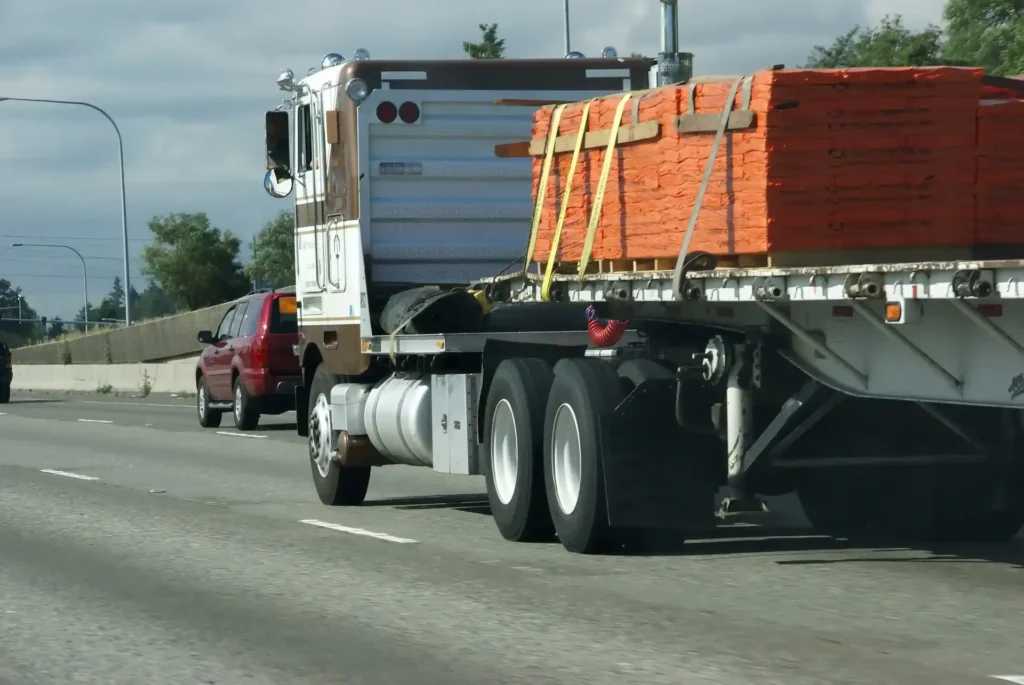
What Makes a Load Oversize?
A load generally becomes oversized when the complete vehicle and cargo exceed the legal dimensional limits established for the road or jurisdiction.
The main dimensions are:
- Width
- Height
- Length
Weight is another important factor, but it is generally treated as an overweight issue rather than an oversize issue. A shipment can, however, be both oversized and overweight.
For example, a piece of construction equipment could be:
- 11 feet wide
- 13 feet high
- 60 feet long
- 90,000 pounds
Depending on the jurisdiction and vehicle configuration, one or more of these measurements could require special authorization.
The important point is that you should measure the complete loaded vehicle, rather than looking only at the cargo itself.
What Width Requires an Oversize Permit?
Width is one of the most common reasons a carrier needs an oversize permit.
In the United States, the federal width standard for commercial motor vehicles on the National Network is generally 102 inches (8 feet 6 inches). FHWA specifically states that if a 102-inch commercial vehicle carries cargo extending beyond 102 inches in width, an overwidth permit is required on the National Network and reasonable access routes.
However, this does not mean that every road in every state has exactly the same practical permitting requirements.
State regulations, exemptions, vehicle types, and route conditions can affect whether a permit is necessary.
Examples of wide loads include:
- Excavators
- Bulldozers
- Cranes
- Large agricultural equipment
- Industrial tanks
- Generators
- Construction materials
- Manufacturing machinery
Even a small amount of additional width can make a difference.
For example, if your loaded vehicle is 8 feet 8 inches wide, it is wider than the federal 102-inch standard applicable to the National Network. The carrier should determine the appropriate state permit requirements before traveling.
What Height Requires an Oversize Permit?
Height is more complicated because there is no single federal maximum height requirement for commercial trucks in the United States.
FHWA explains that states establish their own height limits. Many state limits fall between approximately 13 feet 6 inches and 14 feet, although some states allow higher vehicles.
This means a load that is legal for height in one state may require a permit in another.
Why is height so important?
A tall load can encounter:
- Bridges
- Overpasses
- Tunnels
- Utility lines
- Traffic signals
- Road signs
- Railroad crossings
For this reason, measuring the total loaded height is essential.
For example, if your state’s legal height limit is 14 feet and your loaded vehicle is 14 feet 6 inches tall, you may need an oversize permit and a route that provides adequate clearance.
Never assume that a route is safe simply because a standard truck can use it.
What Length Requires an Oversize Permit?
Length requirements can vary considerably.
Unlike the federal width standard, length rules involve different federal requirements, state rules, vehicle types, trailer configurations, and exemptions.
FHWA notes that states determine many length limits, while federal law establishes certain minimum requirements for interstate routes.
A long load may require special authorization when it exceeds the applicable limit for the truck and trailer combination.
Examples include:
- Long steel beams
- Structural components
- Large pipes
- Wind-energy components
- Industrial machinery
- Construction equipment
- Specialized modular structures
Long loads can be difficult to maneuver through:
- Intersections
- Roundabouts
- Curves
- Narrow roads
- Highway ramps
Therefore, a permit may include route restrictions or other safety conditions.
What Weight Requires an Oversize or Overweight Permit?
Weight is usually handled separately from dimensional oversize requirements.
A truck may need an overweight permit if its gross vehicle weight, axle weight, or axle-group weight exceeds the applicable legal limits.
Federal Interstate weight standards generally include:
- 20,000 pounds on a single axle
- 34,000 pounds on a tandem axle
- 80,000 pounds gross vehicle weight
However, exceptions and state-specific provisions can apply.
Weight is not determined only by the total number on the scale.
Authorities may also consider:
- Number of axles
- Axle spacing
- Weight distribution
- Bridge capacity
- Vehicle configuration
- Route
A heavy load can therefore require specialized route planning and engineering review.
Can a Load Be Both Oversize and Overweight?
Yes.
A single shipment can exceed both dimensional and weight limits.
For example, a large industrial transformer could be:
- 12 feet wide
- 14 feet high
- 70 feet long
- 150,000 pounds
Such a shipment could require authorization for multiple conditions.
Depending on the jurisdiction, the carrier may need an oversize permit, overweight permit, or a combined oversize/overweight permit.
Extremely large shipments may also fall into a superload category.
What Is a Superload?
A superload is generally an exceptionally large or heavy movement that exceeds the normal thresholds for standard oversize or overweight permits.
The exact definition varies by jurisdiction.
For example, Ontario currently considers a single-trip vehicle or load a superload when it exceeds any of these thresholds:
- 120,000 kg gross vehicle weight
- 5 metres in width
- 45.75 metres in length
Superload movements require additional review and can involve more extensive documentation and route analysis.
Ontario states that some superload applications can take significantly longer to process, particularly where engineering reviews and bridge evaluations are required.
This demonstrates why carriers should not wait until the last minute when moving extremely large loads.
What Size Load Requires an Oversize Permit in the USA?
There is no single nationwide answer.
The United States uses a combination of federal size and weight standards and state-level permitting rules.
For the National Network, the federal commercial vehicle width standard is generally 102 inches.
For height, states establish their own limits because there is no federal maximum height requirement for commercial trucks.
Length limits also vary depending on vehicle configuration and applicable federal and state rules.
Therefore, a carrier should determine:
- Total loaded width
- Total loaded height
- Total loaded length
- Gross vehicle weight
- Axle weights
- Axle spacing
- Complete travel route
- States involved
The appropriate permit requirements can then be determined for each jurisdiction.
What Size Load Requires an Oversize Permit in Canada?
Canadian requirements vary between provinces and territories.
For example, Ontario requires oversize/overweight permits when vehicle or load dimensions or weight exceed the limits established under provincial law.
Ontario currently provides different permit categories and limits depending on the type of movement.
For example, its single-trip non-superload permits can accommodate loads up to:
- 5 metres in width, subject to clearance checks
- 45.75 metres in length, subject to clearance checks
- 120,000 kg in weight, subject to approval
Height requirements can depend on route clearance and trailer configuration.
These Ontario figures should not be treated as Canadian-wide limits. Other provinces and territories can have different rules.
If you are moving a load across Canada, check every jurisdiction on the route.
How Do You Measure an Oversize Load?
Accurate measurements are one of the most important parts of the permit process.
You should determine the complete loaded dimensions.
Measure Width
Measure the widest point of the vehicle and cargo.
Include any part of the cargo that extends beyond the trailer.
Measure Height
Measure from the ground to the highest point of the loaded vehicle.
Do not measure only the cargo height.
Measure Length
Measure the complete vehicle and load combination according to the applicable jurisdiction’s measurement rules.
Consider front and rear overhangs where applicable.
Measure Weight
Determine:
- Gross vehicle weight
- Individual axle weights
- Axle group weights
- Axle spacing
Accurate measurements help ensure that the permit reflects the actual configuration.
Does Cargo Type Affect Oversize Permit Requirements?
Yes.
Some loads have characteristics that affect permitting.
Common examples include:
Construction Equipment
Excavators, loaders, cranes, and bulldozers can exceed normal width, height, or weight limits.
Agricultural Machinery
Harvesters, tractors, and specialized farm equipment can be wider than normal highway limits.
Industrial Equipment
Generators, tanks, transformers, and machinery may require specialized permits.
Structural Materials
Large beams, pipes, concrete components, and other construction materials can create length or width issues.
The cargo should be described accurately when applying for a permit.
What Is a Non-Divisible Load?
Some oversize permits are issued for non-divisible loads.
A non-divisible load is generally one that cannot reasonably be divided into smaller loads without compromising its intended use, destroying its value, or requiring more than eight hours of work to dismantle with appropriate equipment.
Both U.S. and Canadian jurisdictions may have rules concerning non-divisible loads.
Ontario, for example, defines an indivisible load partly around whether separating it would compromise its intended use, destroy its value, or require more than eight work hours to dismantle.
Examples can include:
- Large generators
- Construction machinery
- Specialized industrial equipment
- Large transformers
- Certain structural components
The exact rules should always be checked with the applicable authority.
Do Oversize Loads Need Escort Vehicles?
Sometimes.
Escort or pilot car requirements depend on:
- Load width
- Load length
- Load height
- Route
- Jurisdiction
- Traffic conditions
- Permit conditions
There is no single federal pilot-car rule that applies to every U.S. oversize movement. Escort requirements are primarily regulated by states.
Large loads may require one or more escort vehicles.
For extremely large movements, specialized escort requirements can apply.
For example, Ontario requires certified superload escorts for certain superload movements.
Always check the permit conditions before arranging transportation.
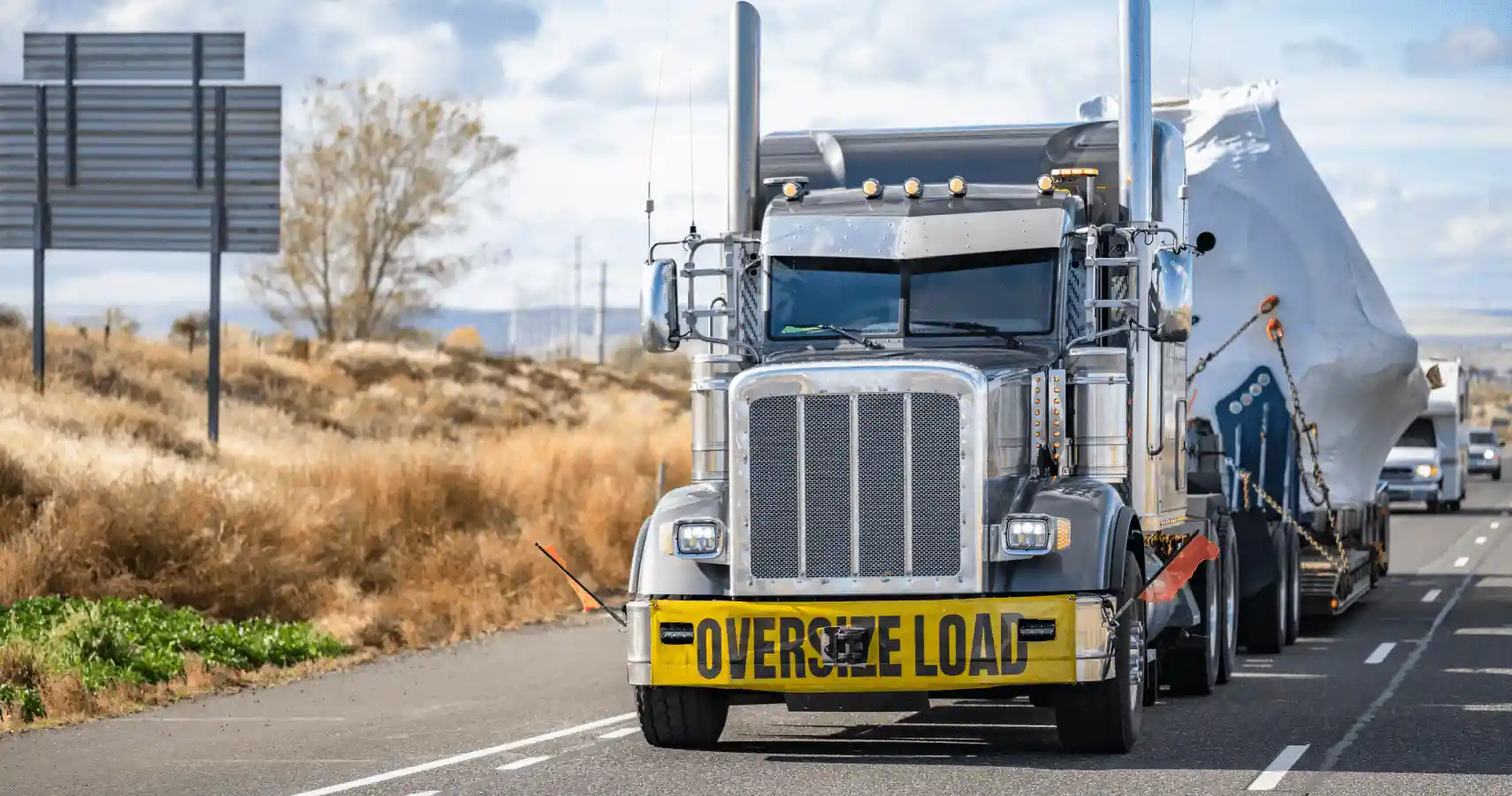
What Happens If Your Load Is Oversized but You Do Not Get a Permit?
Transporting an oversized load without required authorization can create serious problems.
Potential consequences include:
- Fines
- Traffic stops
- Shipment delays
- Vehicle detention
- Route restrictions
- Additional permit costs
- Enforcement action
The driver may also be required to stop until the appropriate authorization is obtained.
For commercial carriers, a delay can affect delivery schedules and customer relationships.
Obtaining the correct permit before starting the trip is generally safer and more efficient than trying to solve a permitting problem on the road.
How Much Does an Oversize Permit Cost?
There is no universal oversize permit price.
The cost can depend on:
- State or province
- Load dimensions
- Weight
- Route
- Travel distance
- Number of jurisdictions
- Permit type
- Permit duration
- Escort requirements
- Engineering requirements
A basic permit may cost relatively little, while a complex superload can involve significantly higher costs.
Additional expenses can include:
- Pilot cars
- Police escorts
- Route surveys
- Bridge analysis
- Engineering reports
- Traffic management plans
- Special equipment
For example, Ontario has different fees for single-trip, annual, project, and overweight permits.
How to Get an Oversize Permit
Once you determine that your load exceeds the applicable limits, the general process is:
1. Measure the Load
Determine accurate width, height, length, weight, axle weights, and axle spacing.
2. Identify Your Route
List every state, province, or territory through which the truck will travel.
3. Check Permit Requirements
Review the applicable size, weight, route, and safety requirements.
4. Gather Documents
Prepare vehicle, carrier, cargo, route, and registration information.
5. Submit the Application
Apply through the appropriate transportation authority or use professional permit assistance.
6. Pay Applicable Fees
Permit fees vary according to the jurisdiction and movement.
7. Arrange Escorts
If pilot cars or other escorts are required, arrange them before the trip.
8. Review the Permit
Check all dates, dimensions, routes, travel times, and special conditions.
9. Transport the Load
Follow the approved route and every condition stated on the permit.
Why Use Professional Oversize Permit Services?
Determining whether a load requires a permit is only the first step.
The process can become complicated when a shipment:
- Crosses multiple states
- Crosses multiple provinces
- Is both oversize and overweight
- Requires pilot cars
- Requires route surveys
- Requires bridge analysis
- Has unusual dimensions
- Has a strict delivery deadline
Professional oversize permit services can help with:
- Permit requirement research
- Application preparation
- Multi-state permits
- Provincial permits
- Route requirements
- Documentation
- Escort requirements
- Permit coordination
For trucking companies that regularly transport large loads, professional permit assistance can reduce administrative work and help prevent avoidable errors.
Frequently Asked Questions
What width requires an oversize permit?
On the U.S. National Network, the federal commercial vehicle width standard is generally 102 inches. Cargo extending beyond that width can require an overwidth permit. State and route-specific requirements should always be checked.
What height requires an oversize permit?
There is no single federal height limit for commercial trucks in the United States. States establish their own limits, with many commonly using limits around 13 feet 6 inches to 14 feet.
What length requires an oversize permit?
Length requirements depend on the vehicle type, configuration, state, province, and route. A load exceeding the applicable legal length may require an oversize permit.
Does weight make a load oversized?
Weight is normally treated as an overweight issue, although a load can be both oversized and overweight.
Do all oversized loads need pilot cars?
No. Escort requirements depend on the load’s dimensions, route, jurisdiction, and permit conditions.
Do Canadian provinces have the same size limits?
No. Each province or territory can establish its own requirements. Ontario’s rules, for example, should not be assumed to apply across all of Canada.
What is a superload?
A superload is an exceptionally large or heavy movement exceeding specific jurisdictional thresholds. The definition varies by jurisdiction. Ontario, for example, defines a superload using thresholds including more than 120,000 kg gross vehicle weight, more than 5 metres width, or more than 45.75 metres length.
Can I transport an oversized load without a permit?
Only if the specific movement is exempt or otherwise legal under the applicable jurisdiction. If the vehicle or load exceeds the legal limits and no exemption applies, the required permit should be obtained before travel.
Conclusion
So, what size load requires an oversize permit?
There is no single answer for every truck route in the USA and Canada. The requirement depends on the vehicle’s width, height, length, weight, configuration, cargo, and travel route.
In the United States, the federal commercial vehicle width standard on the National Network is generally 102 inches, while states establish their own height and many other permitting requirements.
In Canada, requirements are established by the applicable provinces and territories. Ontario, for example, requires oversize/overweight permits when applicable vehicle or load dimensions or weights exceed provincial limits.
Before moving an oversized load, accurately measure the complete vehicle and cargo, determine every jurisdiction on your route, check the applicable limits, and obtain the required permits.
If your shipment crosses multiple states or provinces, involves unusual dimensions, or requires specialized route planning, oversize permit services can help manage the application process and reduce the administrative burden.
The safest approach is to determine your permit requirements before the truck starts moving, rather than discovering a problem after the shipment is already on the road.