Moving oversized equipment, machinery, construction materials, and industrial cargo requires more than a suitable truck and trailer. When a vehicle or load exceeds the legal size or weight limits for a particular road or jurisdiction, the carrier may need an oversize permit before beginning the trip.
Oversize permit requirements can vary significantly between U.S. states and Canadian provinces or territories. A permit issued in one jurisdiction does not automatically give a carrier permission to travel through another. In the United States, the Federal Highway Administration explains that the federal government does not issue oversize or overweight movement permits; states handle these permits.
For carriers, understanding the requirements before a shipment moves is essential. Incorrect dimensions, missing permits, an unauthorized route, or failure to follow permit conditions can cause delays, fines, and additional transportation costs.
This guide explains the main oversize permit requirements for trucking operations in the USA and Canada, what information you need, how the application process works, when escort vehicles may be required, and how professional permit assistance can simplify the process.
What Is an Oversize Permit?
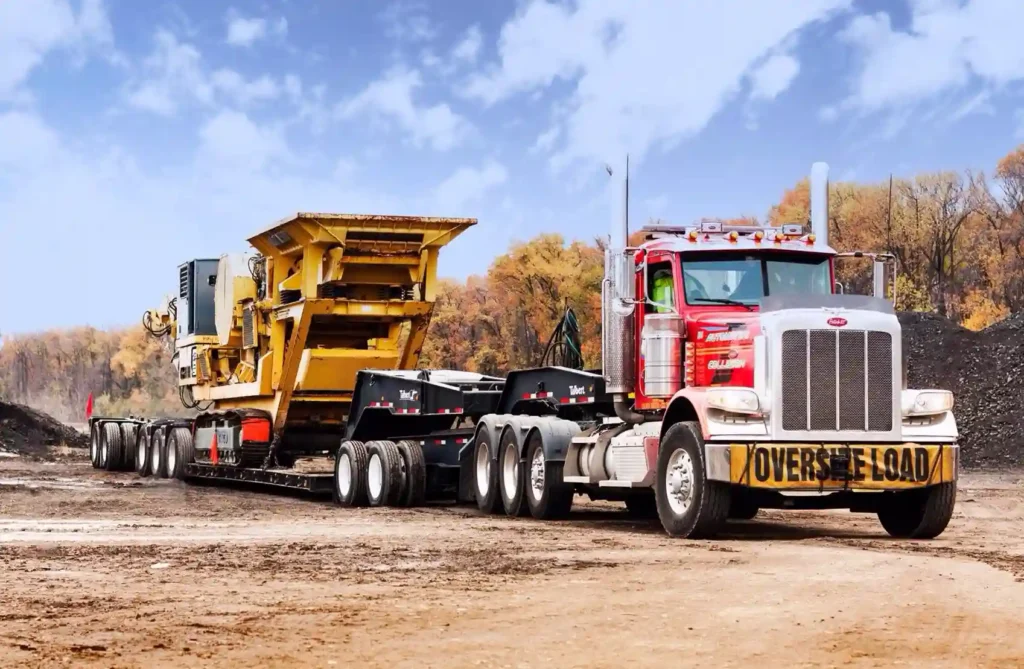
An oversize permit is a special authorization that allows a commercial vehicle to operate with a load that exceeds the normal legal size limits established by a jurisdiction.
A load may be considered oversized because it exceeds the permitted:
- Width
- Height
- Length
Weight is generally addressed through an overweight permit, although many jurisdictions handle size and weight together through an oversize/overweight permit.
The purpose of these permits is not simply to collect fees. They help transportation authorities manage unusual vehicle movements and protect highways, bridges, other infrastructure, drivers, and the public.
An oversize permit may establish specific conditions such as:
- Approved travel route
- Authorized travel dates
- Permitted travel hours
- Maximum dimensions
- Maximum weight
- Required warning signs
- Lighting requirements
- Escort vehicle requirements
- Speed restrictions
- Other safety conditions
The carrier must follow the conditions printed on the permit during the entire permitted movement.
Why Are Oversize Permits Required?
Standard vehicle size and weight regulations help ensure that commercial vehicles can safely operate on public roads.
A very wide vehicle can occupy more than one lane. A tall load may encounter bridges, tunnels, signs, or utility infrastructure. A long vehicle can require additional space when turning or navigating intersections.
Oversize permits allow authorities to review these unusual movements and establish appropriate conditions.
In the United States, federal rules establish certain size and weight standards for the National Network, while states administer oversize and overweight permits. FHWA notes that the federal government does not issue these movement permits itself.
When Is an Oversize Permit Required?
An oversize permit may be required when the complete vehicle and load exceed the applicable legal dimensions in the jurisdiction where the vehicle will operate.
The exact threshold depends on the state, province, territory, road, vehicle type, and load.
Common situations include:
Oversized Width
A load may require an overwidth permit when it extends beyond the legal width limit.
Common examples include:
- Excavators
- Bulldozers
- Cranes
- Agricultural machinery
- Industrial tanks
- Large generators
- Construction components
- Manufacturing equipment
On the U.S. National Network, the federal maximum width for commercial motor vehicles is generally 102 inches, although specific rules and exceptions apply. FHWA also states that cargo extending beyond the applicable width limit can require an overwidth permit.
Because state rules can differ outside the federal framework, carriers should always verify the requirements for the actual route.
Oversized Height
Height is another major consideration.
Tall loads can create clearance problems at:
- Bridges
- Overpasses
- Tunnels
- Utility lines
- Traffic signals
- Road signs
A carrier should measure the complete loaded vehicle from the road surface to the highest point of the load.
A permit authority may require a particular route if the normal route contains low-clearance obstacles.
Oversized Length
A vehicle or load may also require special authorization when it exceeds the applicable length limit.
Long loads can create challenges at:
- Intersections
- Roundabouts
- Curves
- Highway entrances
- Highway exits
- Narrow roads
The permit may specify a route and travel conditions designed to reduce these risks.
Oversize vs. Overweight Permit Requirements
Oversize and overweight permits are related but are not always the same.
An oversize permit generally deals with dimensions such as width, height, and length.
An overweight permit generally deals with vehicle or axle weight exceeding legal limits.
A shipment can be both oversized and overweight. For example, a large piece of construction machinery may exceed both the legal width and gross vehicle weight.
In that situation, the carrier must determine whether the applicable jurisdiction requires one combined permit or separate authorization for different restrictions.
Federal highway guidance also emphasizes the importance of axle weights and axle spacing when determining compliance with weight requirements.
Oversize Permit Requirements in the USA
One of the most important things to understand about U.S. oversize permits is that requirements are largely handled at the state level.
This means there is no single nationwide oversize permit that covers every state.
If a truck is moving an oversized load through several states, the carrier may need a permit for each state through which the load travels. FHWA guidance specifically notes that carriers need permits for each state through which an oversize load travels.
Requirements can include:
- Vehicle information
- Load dimensions
- Gross weight
- Axle configuration
- Origin and destination
- Route information
- Travel dates
- Travel hours
- Warning signs
- Escort requirements
Some jurisdictions provide online permit systems, while complex movements may require additional review.
Do Federal Agencies Issue Oversize Permits?
Generally, no.
The Federal Highway Administration states that the federal government does not issue oversize or overweight movement permits. States have the authority to issue these permits.
Federal standards still matter, especially for vehicles operating on the National Network, but the actual movement permit is generally obtained through the appropriate state authority.
Oversize Permit Requirements in Canada
Canada also has rules governing oversized and overweight commercial vehicles, but requirements can vary between provinces and territories.
A carrier moving a large load should identify every jurisdiction on the planned route and check its applicable requirements.
Depending on the movement, authorities may require information about:
- Vehicle configuration
- Load dimensions
- Weight
- Axle spacing
- Route
- Origin
- Destination
- Travel date
- Travel time
- Safety equipment
- Escort vehicles
The requirements can also depend on the road being used. A special route, bridge, national park, or restricted roadway may have additional requirements.
For example, Parks Canada has specific permit requirements for certain oversized or overweight vehicles using restricted areas. Its guidance shows that some movements can require additional authorization and route-specific conditions beyond general provincial requirements.
Documents Needed for an Oversize Permit
The exact documents depend on the jurisdiction and type of load, but carriers should be prepared to provide accurate information.
Common information includes:
- Carrier name
- Contact information
- Vehicle registration
- Truck information
- Trailer information
- VIN or other vehicle identification
- Load description
- Overall width
- Overall height
- Overall length
- Gross vehicle weight
- Axle weights
- Axle spacing
- Origin
- Destination
- Proposed route
- Travel dates
Some complex movements may require additional supporting documents, engineering information, route studies, or other approvals.
The more unusual the load, the more information the permit authority may need to evaluate the movement.
How to Apply for an Oversize Permit
The application process varies by jurisdiction, but the following approach works as a general starting point.
Step 1: Measure the Complete Vehicle and Load
Do not measure only the cargo.
Determine the dimensions of the entire loaded combination:
- Overall width
- Overall height
- Overall length
- Gross weight
- Axle weights
- Axle spacing
Accurate information is essential because the permit conditions are based on the information submitted.
Step 2: Identify Every Jurisdiction
Map the complete route and identify every state, province, or territory the truck will enter.
Do not assume that approval from the origin jurisdiction automatically applies to the rest of the route.
Step 3: Check Applicable Limits
Compare the vehicle and load dimensions with the legal limits in every jurisdiction.
This determines which permits and special conditions may be required.
Step 4: Plan the Route
Route planning is especially important for oversized loads.
Check for:
- Low bridges
- Weight-restricted bridges
- Narrow roads
- Tunnels
- Sharp turns
- Construction areas
- Restricted roads
- Clearance problems
The approved permit may prescribe a specific route.
Step 5: Apply for the Required Permits
Submit the required vehicle, cargo, weight, dimension, and route information to the appropriate authority.
Step 6: Review the Approved Permit
Once the permit is issued, carefully review every condition.
Check the:
- Valid dates
- Approved route
- Travel times
- Dimension limits
- Weight limits
- Escort requirements
- Sign requirements
- Lighting requirements
Step 7: Give the Driver the Required Documentation
The driver should have access to the applicable permit documentation during the permitted movement.
What Are Non-Divisible Loads?
A non-divisible load is an important concept in oversize and overweight permitting.
Under federal guidance in the United States, a non-divisible load can include a vehicle or load that exceeds applicable limits and cannot reasonably be divided into smaller loads without compromising its intended use, destroying its value, or requiring more than eight work hours to dismantle using appropriate equipment.
Examples can include:
- Bulldozers
- Large generators
- Scrapers
- Modular structures
Non-divisible status can affect whether a state can issue certain permits and what conditions apply.
Carriers should not automatically assume that any large shipment qualifies as non-divisible. The applicable jurisdiction determines the rules and documentation needed.
Are Escort Vehicles Part of Oversize Permit Requirements?
Sometimes.
An escort vehicle, also called a pilot car in some jurisdictions, helps improve safety when an oversized load creates additional traffic or visibility challenges.
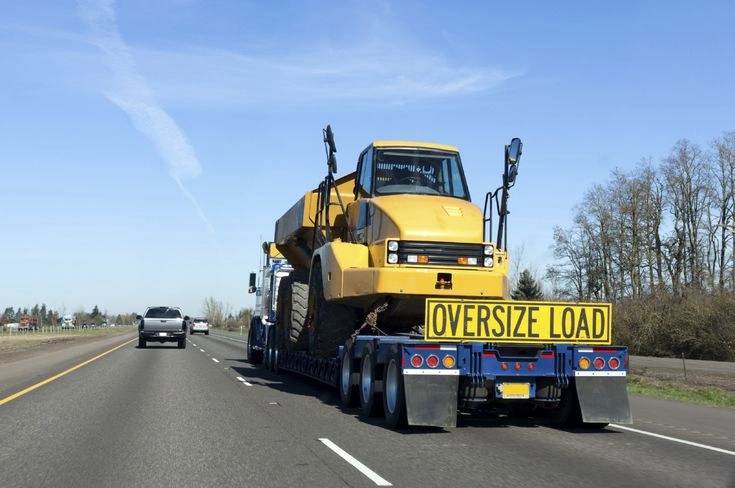
Whether an escort is required can depend on:
- Load width
- Load length
- Load height
- Route
- Jurisdiction
- Traffic conditions
- Permit conditions
FHWA guidance explains that permits can establish travel dates, travel times, routes, and the number of pilot/escort vehicles required.
For larger or more complicated loads, multiple escorts may be required.
The carrier should never guess about escort requirements. The permit conditions and applicable jurisdictional rules should be reviewed before the trip.
What Are the Route Requirements for Oversized Loads?
Route requirements are one of the most important parts of oversize permitting.
A permitted route may be selected to reduce risks associated with:
- Low clearances
- Weak bridges
- Narrow lanes
- Sharp turns
- Heavy traffic
- Road construction
- Restricted roads
- Utility infrastructure
A permit may authorize travel only on a specified route.
FHWA guidance notes that permits typically establish the route and travel conditions for permitted movements.
Carriers should therefore avoid changing the route without confirming whether the change is allowed.
How Much Do Oversize Permits Cost?
Oversize permit fees vary considerably.
The cost can depend on:
- State or province
- Vehicle dimensions
- Weight
- Number of jurisdictions
- Distance
- Permit type
- Permit duration
- Route
- Escort requirements
- Engineering or bridge analysis
A simple single-trip permit may have a relatively modest fee, while a complicated heavy-haul movement can involve additional costs.
The overall transportation budget may also need to include:
- Pilot cars
- Police escorts
- Route surveys
- Engineering reviews
- Bridge analysis
- Special equipment
- Administrative services
Therefore, carriers should consider the complete cost of compliance rather than looking only at the permit application fee.
How Long Does It Take to Get an Oversize Permit?
Processing time varies by jurisdiction and the complexity of the movement.
A straightforward permit may be processed quickly through an online system. More complicated loads may require manual review, route analysis, engineering evaluation, or additional approvals.
Carriers should apply early enough to allow time for:
- Application review
- Corrections
- Route changes
- Additional documentation
- Special approvals
Waiting until the last minute can create unnecessary scheduling problems.
Common Oversize Permit Mistakes
1. Incorrect Load Measurements
Providing the wrong dimensions can result in an inaccurate permit.
2. Forgetting a State or Province
A multi-jurisdiction route may require several permits.
3. Ignoring Route Restrictions
The approved route may be part of the permit conditions.
4. Missing Travel-Time Restrictions
Some permits limit when the load can travel.
5. Failing to Arrange Escorts
If an escort is required, it should be arranged before the shipment begins.
6. Using an Expired Permit
Always verify the permit’s effective dates.
7. Assuming One Permit Covers Everything
A permit may authorize only a particular jurisdiction, route, vehicle, or movement.
How Professional Oversize Permit Services Can Help
Managing oversize permits can become difficult when a load crosses multiple states or provinces.
Professional permit assistance can help carriers with:
- Permit requirement research
- Application preparation
- Vehicle and load information
- Multi-jurisdiction coordination
- Route requirements
- Permit documentation
- Escort requirements
- Compliance checks
This can save time for trucking companies that regularly transport oversized loads or operate across multiple jurisdictions.
For complex shipments, getting experienced help before the trip can reduce paperwork errors and help keep the transportation schedule on track.
Frequently Asked Questions
What are the basic oversize permit requirements?
Basic requirements generally include accurate vehicle and load dimensions, weight information, carrier details, route information, travel dates, and any additional safety information required by the jurisdiction.
Do I need an oversize permit in every U.S. state?
Not necessarily. You need permits according to the requirements of the states you travel through and the dimensions and weight of your vehicle and load. If the load is permitted in multiple states, separate state permits may be required.
Are oversize permits required in Canada?
Yes, oversized and overweight movements are regulated by Canadian jurisdictions. Requirements can vary between provinces and territories, so carriers should check each jurisdiction on their route.
Is an oversize permit the same as an overweight permit?
No. Oversize generally refers to dimensions such as width, height, and length, while overweight refers to weight. A shipment can require authorization for both.
Do oversized loads need pilot cars?
Some do, but not all. Escort requirements depend on the dimensions, route, jurisdiction, and conditions of the permit.
Can an oversize permit specify a route?
Yes. Permit authorities can establish an approved route and other travel conditions for an oversized movement.
What happens if I move an oversized load without a permit?
Depending on the jurisdiction and circumstances, the carrier may face fines, delays, enforcement action, or other penalties. The vehicle may also be prevented from continuing until the appropriate authorization is obtained.
Conclusion
Understanding oversize permit requirements is essential for trucking companies moving large or specialized loads in the USA and Canada. The requirements can vary based on vehicle dimensions, weight, cargo type, route, and jurisdiction.
In the United States, oversize movement permits are generally issued by states rather than the federal government. In Canada, requirements are handled through the applicable provincial, territorial, and other authorities.
Before transporting an oversized load, carriers should accurately measure the complete vehicle and cargo, identify every jurisdiction on the route, determine the required permits, plan an approved route, and review all permit conditions.
For carriers handling complex or multi-jurisdiction shipments, professional oversize permit services can simplify the application process and help manage the documentation and requirements involved.
The safest approach is to plan the permit before the truck starts moving—not after a problem occurs on the road.
Once you know the requirements, the next step is learning how to get an oversize permit for each state or province on your route. Carriers should also confirm what size load requires an oversize permit and review the main oversize load rules before dispatching the load.