
Moving an oversize load is not the same as moving a standard truckload. When a vehicle or cargo is wider, taller, longer, or heavier than the legal limits, carriers may need special permits and must follow extra safety rules.
Oversize load rules can vary from one state, province, or local road authority to another. In the United States, oversize and overweight permits are generally handled by individual states rather than the federal government. In Canada, requirements are mainly controlled by provinces and territories. This means a carrier moving one load through several jurisdictions may need to check and follow different rules for the same trip.
Understanding these rules before the truck leaves the yard can help prevent delays, fines, route problems, and safety issues.
This guide explains the most important oversize load rules for carriers in the USA and Canada, including permits, load dimensions, route planning, pilot cars, travel restrictions, safety requirements, and common mistakes.
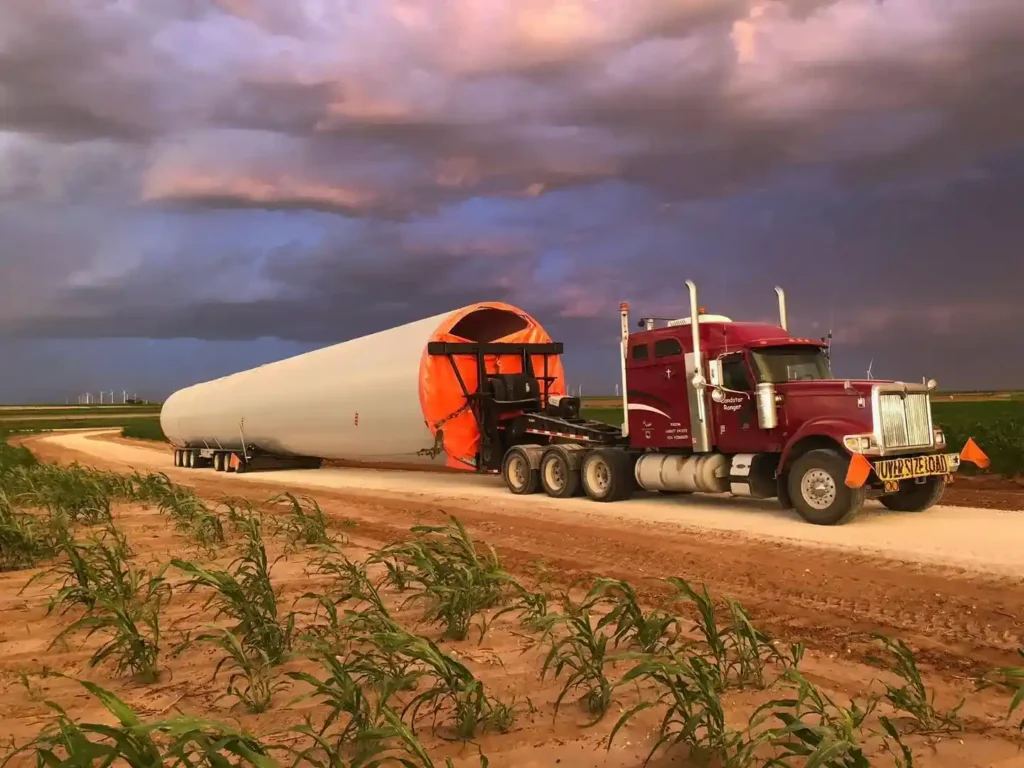
What Is an Oversize Load?
An oversize load is cargo or a vehicle combination that exceeds the legal size limits for the road or jurisdiction where it will travel.
A load may become oversize because of its:
- Width
- Height
- Length
- Weight
- Front or rear overhang
- Overall vehicle and cargo dimensions
For example, a commercial vehicle carrying cargo that extends beyond the applicable 102-inch width limit on the U.S. National Network may require an overwidth permit.
Common examples of oversize cargo include:
- Construction equipment
- Cranes
- Excavators
- Bulldozers
- Large agricultural equipment
- Industrial machinery
- Structural steel
- Transformers
- Manufactured buildings
- Large tanks
- Wind energy equipment
- Heavy construction components
The important point is that the cargo and vehicle are normally considered together when determining whether the movement exceeds a legal limit.
1. Check the Legal Dimensions Before Your Trip
One of the most important oversize load rules is to measure the complete vehicle and load before applying for a permit.
Do not estimate the dimensions.
Measure:
- Overall width
- Overall height
- Overall length
- Gross vehicle weight
- Axle weights
- Front overhang
- Rear overhang
- Trailer dimensions
In the United States, the federal National Network width standard for commercial motor vehicles is generally 102 inches. Hawaii has a different 108-inch maximum under federal provisions. Cargo extending beyond the applicable width limit can require an overwidth permit.
Height is different because there is no single federal commercial vehicle height limit. States establish their own height standards, and many are in the range of 13 feet 6 inches to 14 feet, although individual routes and jurisdictions can have different restrictions.
This is why carriers should never assume that a load permitted in one state will automatically be legal in another.
2. Know When You Need an Oversize Permit
If your vehicle or load exceeds the applicable legal size or weight limit, you may need a special permit before traveling.
In the United States, the federal government does not issue general oversize or overweight movement permits. States issue these permits according to their own laws and procedures.
For a multi-state trip, a carrier should check every state on the planned route.
This can include:
- State permits
- Local permits
- Toll-road requirements
- Municipal permissions
- Special route approvals
- Bridge restrictions
- Escort requirements
The permit normally identifies important conditions for the movement, such as the approved route, travel dates, travel times, and escort requirements.
3. Oversize and Overweight Are Not the Same
Carriers often use the term “oversize load” for any large shipment, but oversize and overweight are different issues.
An oversize load exceeds a dimensional limit such as:
- Width
- Height
- Length
An overweight load exceeds a legal weight limit.
A shipment can be:
- Oversize only
- Overweight only
- Both oversize and overweight
For example, a piece of equipment may be 12 feet wide but still fall below a particular weight limit. Another shipment could have normal dimensions but weigh more than the legal axle or gross vehicle weight.
This distinction matters because permit applications and route approvals may require different information depending on the type of movement.
4. Understand Non-Divisible Load Rules
Many oversize permits are designed for non-divisible loads.
A non-divisible load generally cannot be divided into smaller pieces without damaging its value, preventing it from performing its intended function, or requiring excessive dismantling time.
FHWA describes a non-divisible load as a vehicle or load that, if separated, would compromise its intended use, destroy its value, or require more than eight work hours to dismantle using appropriate equipment.
Examples can include:
- Large construction machines
- Industrial generators
- Heavy transformers
- Large tanks
- Specialized manufacturing equipment
However, the exact definition and permit treatment can differ by jurisdiction.
Carriers should provide accurate information about the cargo instead of assuming that every large shipment qualifies.
5. Apply for the Correct Permit
Not every oversize movement uses the same permit.
Depending on the jurisdiction and type of operation, carriers may encounter:
Single-trip permits
These are generally designed for one specific movement along an approved route.
They are useful when a carrier has an individual oversize shipment that needs to move from one location to another.
Annual permits
Some jurisdictions offer annual permits for qualifying recurring oversize or overweight operations.
These can be useful for carriers that regularly move similar equipment or configurations.
Project permits
Project permits can be useful when a carrier repeatedly transports similar loads along a specified route for a particular project.
Special permits
Some unusual vehicle configurations, exceptional loads, or very large movements may require additional approval.
For example, Ontario currently recognizes annual, project, single-trip, and special vehicle configuration permits. Its rules also include specific requirements for superloads.
The correct permit depends on the jurisdiction, load, vehicle configuration, route, and frequency of travel.
6. Follow the Approved Route
Getting an oversize permit does not always mean you can take any road you want.
The approved route is one of the most important parts of an oversize load permit.
A route may be selected based on:
- Bridge clearances
- Overhead wires
- Traffic signals
- Road width
- Construction
- Weight limits
- Sharp turns
- Railroad crossings
- Low bridges
- Road conditions
- Seasonal restrictions
- Local traffic rules
FHWA notes that oversize load routes may need to account for turning radius, vertical clearance, horizontal clearance, construction, road closures, and other restrictions.
A carrier should not change the route simply because another road looks shorter.
If the permit specifies a route, follow it.
7. Check Height Clearance Carefully
Height is one of the biggest risks when moving oversized equipment.
A load that looks safe in an open yard can become dangerous when it reaches:
- Bridges
- Tunnels
- Utility lines
- Traffic lights
- Signs
- Overhead structures
- Railroad crossings
A carrier should know the total height from the road surface to the highest point of the load.
Do not measure only the cargo.
The trailer, suspension, tires, and cargo placement can all affect total height.
Route planning is especially important because there is no single federal height limit for commercial vehicles in the United States. States establish their own standards.
8. Know When Pilot Cars or Escort Vehicles Are Required
Pilot cars, also called escort vehicles, help protect the oversized load, the truck driver, and other road users.
Whether an escort is required depends on the jurisdiction and the dimensions of the load.
Some jurisdictions may require:
- One escort vehicle
- Two escort vehicles
- Front escort
- Rear escort
- Police escort
- Certified pilot/escort operators
Escort rules are mainly established at the state level in the United States, and requirements can differ significantly between states.
A permit may specify exactly how many escorts are required and where they must be positioned.
Do not assume that an escort requirement from one state applies everywhere.
9. Follow Travel Time Restrictions
Oversize loads may not always be allowed to travel at any time of day.
A permit can specify:
- Allowed travel dates
- Allowed travel hours
- Restricted hours
- Holiday restrictions
- Weekend restrictions
- Night travel restrictions
- Seasonal restrictions
Traffic conditions can also affect the approved movement.
For example, Ontario has specific restrictions for certain larger permitted movements, including special rules around weekends, holidays, and congested traffic areas.
Because these rules change by jurisdiction, carriers should read every condition on the permit before beginning the trip.
10. Secure the Load Properly
Load securement is a basic safety requirement for every heavy haul operation.
The cargo should be properly secured so that it does not:
- Shift
- Slide
- Fall
- Become detached
- Strike another vehicle
- Create a road hazard
Carriers should inspect:
- Chains
- Straps
- Binders
- Blocking
- Bracing
- Tie-down points
- Trailer condition
- Load position
Some jurisdictions have additional requirements for exceptionally large or unusual cargo.
For example, Ontario requires loads moved under an oversize/overweight permit to be properly secured and places responsibility on the permit holder for complying with applicable conditions.
11. Keep the Permit With the Vehicle
Once the permit is issued, the driver should have access to the required permit documentation during the trip.
The permit may need to be produced during an inspection.
The driver should understand:
- Approved route
- Approved travel dates
- Travel times
- Load dimensions
- Weight limits
- Escort requirements
- Special conditions
- Restrictions
- Contact information
Do not assume that the permit office or dispatcher will be able to solve a problem instantly after the truck is already on the road.
The driver should know the permit conditions before departure.
12. Canada Has Province-Specific Oversize Load Rules
Carriers moving oversized loads in Canada need to pay close attention to provincial requirements.
There is no single oversize load rule that covers every Canadian province and territory.
Requirements can vary in:
- Maximum dimensions
- Weight limits
- Permit types
- Escort requirements
- Travel times
- Route approval
- Fees
- Application processing
- Municipal permissions
Ontario provides a useful example.
Ontario’s standard vehicle width limit is generally 2.6 metres, and oversize/overweight permits are available for qualifying movements above normal limits. The province also has specific rules for annual, project, single-trip, and superload permits.
For example, Ontario currently treats a single-trip movement exceeding 120,000 kg gross vehicle weight, 5 metres in width, or 45.75 metres in length as a superload. Superloads require additional review and documentation.
These Ontario figures should not be treated as universal Canadian limits. Carriers should verify the rules for every province on the route.
13. Cross-Border Loads Need Extra Planning
Moving an oversize load between the United States and Canada requires additional planning.
A cross-border carrier may need to consider:
- U.S. state permits
- Canadian provincial permits
- Border crossing requirements
- Customs documentation
- Approved routes
- Escort requirements
- Vehicle registration
- Insurance
- Travel restrictions
- Bridge and infrastructure limits
A permit for one side of the border does not automatically authorize travel on the other side.
For example, a carrier traveling from the United States into Ontario must satisfy Ontario’s requirements for the portion of the movement inside the province.
This makes accurate route planning especially important for international heavy haul operations.
14. Watch for Superload Requirements
A superload is an exceptionally large or heavy movement that requires more detailed review than a routine oversize load.
The definition varies by jurisdiction.
Superloads can involve:
- Very high gross weight
- Extreme width
- Extreme length
- Engineering review
- Bridge analysis
- Traffic management plans
- Special escorts
- Route surveys
- Utility coordination
- Police assistance
Ontario, for example, classifies a load exceeding 120,000 kg gross vehicle weight, 5 metres in width, or 45.75 metres in length as a superload under its current rules. Some superload applications can take substantially longer to review.
Carriers should start superload planning well before the intended travel date.
15. Check Road and Construction Conditions
A route that was safe last month may not be suitable today.
Construction can create:
- Lane closures
- Reduced clearances
- Detours
- Temporary bridges
- Narrow lanes
- Weight restrictions
- Traffic delays
Before moving the load, check current road conditions and construction information.
This is particularly important for very wide, tall, or heavy loads where a small route change can create a major problem.
16. Do Not Ignore Local Road Authorities
State or provincial approval may not always be enough.
Some routes include:
- City roads
- County roads
- Municipal roads
- Toll roads
- Private roads
- Local bridges
Additional permission may be required.
Ontario, for example, states that its oversize/overweight permits apply to provincial King’s highways and that additional municipal permission may be needed when traveling on municipal roads.
Always identify every road authority involved in the planned route.
17. Understand the Risks of Violating Permit Conditions
An oversize permit is not a free pass to ignore transportation rules.
A carrier can face problems if:
- The actual load is larger than the permitted dimensions
- The vehicle is heavier than the approved weight
- The truck leaves the approved route
- The carrier travels outside permitted hours
- Required escorts are missing
- Required signs or equipment are missing
- The load is not properly secured
- Permit conditions are violated
Depending on the jurisdiction, violations can result in citations, fines, delays, permit cancellation, or other enforcement action.
Ontario specifically states that permit conditions must be followed and that a permit can be terminated for a breach of conditions.
18. Common Oversize Load Mistakes Carriers Should Avoid
Even experienced carriers can make mistakes when planning oversized shipments.
Some common errors include:
Using the wrong dimensions
Never use an estimated measurement from an old shipment.
Measure the current load.
Forgetting cargo width
A trailer may be legal by itself, but the cargo can extend beyond the legal width.
Ignoring height
A few inches can make the difference between clearing an overhead structure and causing a serious incident.
Applying too late
Permit processing can take several business days or longer for complex movements.
Ontario, for example, currently advises carriers to apply well in advance for annual and project permits, while superloads can require much longer review.
Assuming one permit covers every jurisdiction
A multi-state or multi-province trip may require separate approvals.
Ignoring local roads
Municipal permits or permissions may be necessary.
Changing the route
The shortest route is not necessarily the legal or safest route.
How to Make Oversize Permit Planning Easier
Carriers can reduce problems by creating a standard checklist for every oversized shipment.
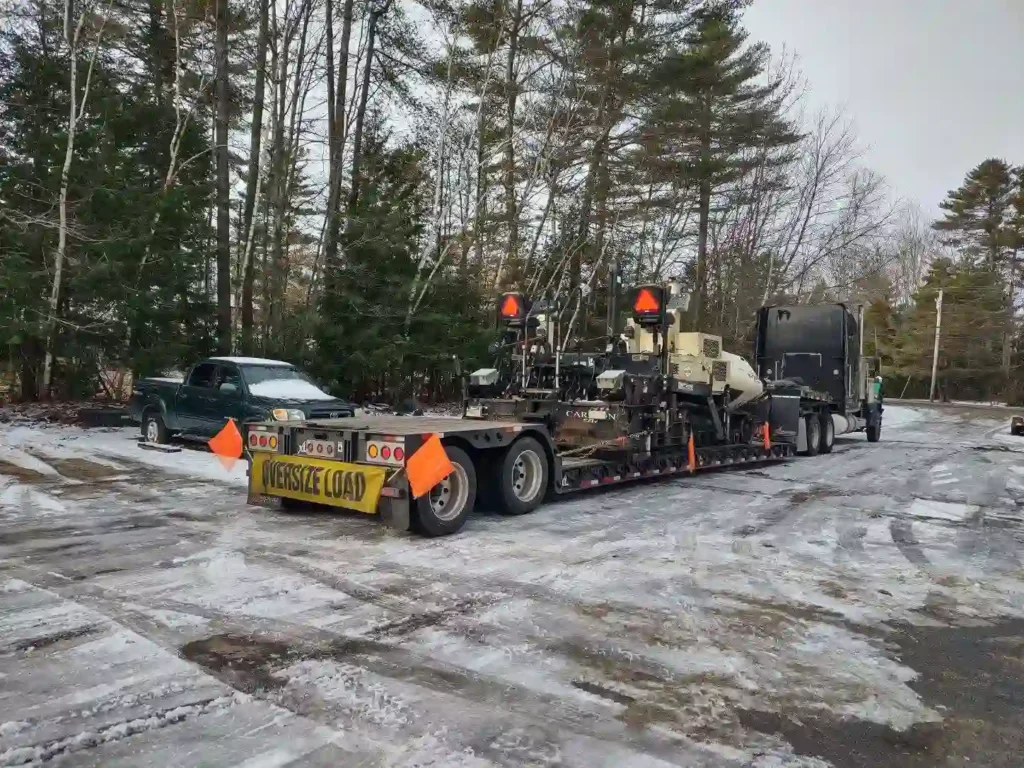
Before departure, confirm:
- Cargo dimensions
- Gross vehicle weight
- Axle weights
- Trailer configuration
- Load securement
- Required permits
- Approved route
- Travel dates
- Travel hours
- Escort requirements
- Height clearances
- Bridge restrictions
- Construction conditions
- Local permissions
- Required signs and equipment
- Driver documentation
For complicated movements, professional oversize permit services can help carriers identify permit requirements, prepare applications, review routes, and manage the paperwork involved in multi-jurisdiction transportation.
This can be especially useful when a shipment crosses several states or provinces or involves unusual dimensions.
Oversize Load Rules Checklist for Carriers
Before moving an oversized load, ask these questions:
- Is the load wider than the legal limit?
- Is the load taller than the legal limit?
- Is the load longer than the legal limit?
- Is the vehicle overweight?
- Is the load non-divisible?
- Which states or provinces will the truck enter?
- Does every jurisdiction require a permit?
- What route is approved?
- Are pilot cars required?
- Is a police escort required?
- What travel times are allowed?
- Are weekend or holiday restrictions applicable?
- Are there low bridges or overhead obstacles?
- Are local permits required?
- Is the load properly secured?
- Does the permit exactly match the actual load?
- Does the driver have the required documentation?
Answering these questions before departure can prevent many common oversize transportation problems.
Frequently Asked Questions
What size load requires an oversize permit?
There is no single size that applies everywhere. In the United States, the National Network commercial vehicle width standard is generally 102 inches, while states establish many other dimensional requirements. Cargo extending beyond applicable limits may require an oversize permit.
Do I need a permit in every state?
If your oversized movement travels through multiple states, you generally need to check the permit requirements of each state. FHWA notes that states issue permits for oversize movements within their jurisdictions.
Are pilot cars required for every oversize load?
No. Escort requirements depend on the jurisdiction and the dimensions and characteristics of the load. State requirements can differ significantly.
Is an overweight load the same as an oversize load?
No. Oversize normally refers to dimensions such as width, height, or length. Overweight refers to exceeding applicable weight limits. A shipment can be oversize, overweight, or both.
Can I change my route after getting an oversize permit?
You should not assume that you can. If the permit specifies an approved route, follow that route and contact the appropriate permitting authority if a change is necessary.
Do Canadian provinces have the same oversize load rules?
No. Oversize and overweight requirements can vary by province and territory. Ontario, for example, has its own permit types, dimensions, weight limits, escort requirements, and route conditions.
How early should I apply for an oversize permit?
Apply as early as possible, especially for large or complex shipments. Processing times depend on the jurisdiction and permit type. Superloads may require engineering reviews and additional documentation, which can significantly increase processing time.
Conclusion
Oversize load rules are designed to protect drivers, other road users, bridges, roads, and surrounding infrastructure. For carriers, following these rules is also important for keeping shipments on schedule and avoiding unnecessary delays.
The most important steps are simple: measure the complete load accurately, determine whether an oversize or overweight permit is required, check every state or province on the route, follow the approved route, meet escort requirements, obey travel restrictions, and keep the load properly secured.
For U.S. and Canadian heavy haul operations, never assume that one jurisdiction’s rules apply everywhere. Permit requirements can change based on load dimensions, weight, vehicle configuration, route, road authority, and local conditions.
When a shipment is complex, using professional oversize permit services can make the permitting process easier and help carriers prepare the correct information before the load moves.