
Moving a heavy load is not as simple as putting it on a trailer and driving to the destination. When the total vehicle weight, axle weight, or weight of an axle group exceeds the legal limit for a road or jurisdiction, the carrier may need an overweight permit.
An overweight permit gives a carrier special authorization to move a vehicle or load above normal weight limits under specific conditions. These conditions can include an approved route, travel dates, travel hours, axle weights, gross weight, escort requirements, and other safety rules.
The requirements are different across the United States and Canada. In the U.S., individual states generally control oversize and overweight permits. In Canada, vehicle weight and dimension rules are mainly handled by provinces and territories.
This means a carrier moving a heavy load across several states or provinces needs to check the requirements for each jurisdiction.
This guide explains overweight permit requirements, including weight limits, axle requirements, documents, route planning, application steps, costs, processing times, and common mistakes.
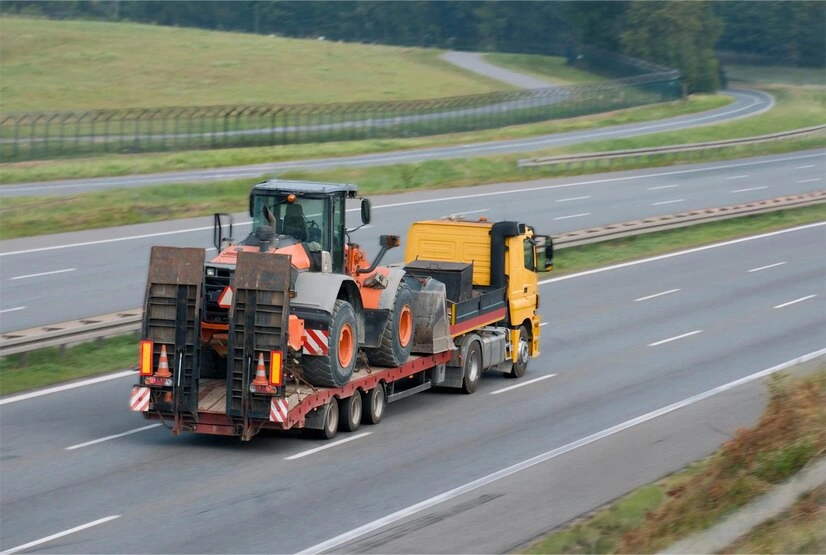
What Is an Overweight Permit?
An overweight permit is a special authorization that allows an eligible truck, trailer, vehicle combination, or load to travel when it exceeds an applicable legal weight limit.
The permit is usually issued for a specific vehicle, load, route, and period.
The permit may identify:
- Maximum gross vehicle weight
- Maximum axle weights
- Axle spacing
- Approved route
- Travel dates
- Travel times
- Speed restrictions
- Bridge conditions
- Escort requirements
- Load securement requirements
- Other special conditions
The Federal Highway Administration describes a permit as an exceptional authorization that allows a motor carrier to transport oversized or overweight cargo for a limited period and according to the needs of the particular vehicle or load.
An overweight permit is therefore not a permanent exemption from transportation laws. The carrier must follow the conditions written on the permit.
When Do You Need an Overweight Permit?
You may need an overweight permit when the vehicle and load exceed a legal weight limit that applies to the planned route.
The limit may apply to:
- Total gross vehicle weight
- Single axle weight
- Tandem axle weight
- Multiple axle groups
- Bridge weight limits
- Special road restrictions
A carrier should not look only at the total weight of the truck.
Axle weight and axle spacing can also matter.
For example, a heavy machine may weigh 90,000 pounds in total, but if too much weight is concentrated on a particular axle group, the vehicle may still exceed an applicable restriction.
This is why accurate weight distribution is one of the most important parts of an overweight permit application.
What Are the U.S. Federal Weight Limits?
For the Interstate System, federal standards generally include:
- 80,000 pounds gross vehicle weight
- 20,000 pounds on a single axle
- 34,000 pounds on a tandem axle
The federal bridge formula can also affect allowable weight based on axle spacing.
However, carriers should not assume that these numbers automatically determine whether a permit is required for every shipment.
States administer overweight permits for movements within their jurisdictions, and state rules can vary.
The Federal Highway Administration confirms that the federal government establishes certain size and weight requirements but does not issue oversize or overweight movement permits. Permit authority rests with individual states.
Therefore, a carrier planning a heavy haul shipment should check the exact state requirements for the intended route.
Overweight vs. Oversize: What Is the Difference?
These two terms are often used together, but they describe different problems.
Overweight Load
An overweight load exceeds an applicable weight limit.
This can involve:
- Gross vehicle weight
- Single axle weight
- Tandem axle weight
- Other axle groups
- Bridge formula restrictions
Oversize Load
An oversize load exceeds an applicable dimensional limit, such as:
- Width
- Height
- Length
A shipment can be overweight and oversize at the same time.
For example, a large transformer may be both 12 feet wide and 100,000 pounds. The carrier may need authorization for its width as well as its weight.
When planning a heavy haul shipment, determine both the dimensions and weight before applying for permits.
Important Overweight Permit Requirements
While every jurisdiction has its own rules, most overweight permit applications require detailed information about the vehicle, load, and planned movement.
1. Accurate Gross Vehicle Weight
The carrier needs to know the total loaded weight.
This can include:
- Tractor
- Trailer
- Cargo
- Fuel
- Equipment
- Other items carried by the vehicle
The weight should be based on the actual shipment rather than an estimate.
Incorrect weight information can result in an incorrect permit.
2. Axle Weights
Authorities may require the weight carried by each axle or axle group.
Depending on the vehicle configuration, this can include:
- Steering axle
- Drive axles
- Tandem axles
- Tridem axles
- Trailer axles
- Other axle groups
Accurate axle weights help authorities determine whether the proposed vehicle can safely use the planned route.
3. Axle Spacing
Axle spacing is another important requirement.
Two vehicles can have the same total weight but distribute that weight differently across their axles.
The spacing between axles can affect how weight is applied to bridges and road infrastructure.
This is one reason carriers should provide accurate axle configuration information when applying for an overweight permit.
4. Vehicle Configuration
The application may require information about:
- Tractor type
- Trailer type
- Number of axles
- Axle spacing
- Tire configuration
- Vehicle combination
- Special equipment
The exact information required depends on the state or province and the type of permit being requested.
5. Cargo Description
The permitting authority may ask what is being transported.
Examples include:
- Construction equipment
- Excavators
- Cranes
- Generators
- Transformers
- Industrial machinery
- Large tanks
- Agricultural equipment
- Manufacturing equipment
The cargo description can help determine whether the shipment qualifies for a particular type of permit.
6. Divisible or Non-Divisible Load
This is an important part of overweight permitting.
A non-divisible load is generally a load that cannot be separated into smaller loads without compromising its intended use, destroying its value, or requiring more than eight work hours to dismantle with appropriate equipment.
Large specialized equipment is a common example.
Rules for divisible and non-divisible loads can be different. FHWA notes that states may issue permits for non-divisible loads under conditions that differ from the treatment of divisible loads.
Do not assume that any heavy shipment qualifies as non-divisible.
7. Origin and Destination
The permit application may require:
- Starting location
- Final destination
- Intermediate locations
- Complete route
The origin and destination help the authority determine which roads and infrastructure will be used.
8. Proposed Route
Route information is particularly important for overweight transportation.
Authorities may need to consider:
- Bridges
- Weight-restricted roads
- Construction
- Road conditions
- Sharp turns
- Narrow roads
- Local restrictions
- Toll roads
For very heavy loads, a route that is suitable for a standard truck may not be suitable for the permitted vehicle.
How to Get an Overweight Permit
The exact application process varies, but carriers can generally follow these steps.
Step 1: Determine the Actual Weight
Start by determining the actual weight of the complete vehicle and load.
Record:
- Gross weight
- Individual axle weights
- Axle group weights
- Axle spacing
- Vehicle configuration
Using accurate information at this stage can prevent problems later.
Step 2: Determine Whether the Load Is Divisible
Check whether the cargo can reasonably be divided into smaller shipments.
If it is a non-divisible load, determine whether the applicable jurisdiction provides a permit for that type of movement.
Step 3: Identify Every State or Province
For a multi-jurisdiction shipment, make a list of every state or province the truck will enter.
Do not assume that a permit issued by one authority covers the entire journey.
In the United States, states issue their own oversize/overweight movement permits.
In Canada, vehicle weight and dimension rules fall mainly under provincial and territorial authority.
Step 4: Check Weight and Axle Limits
Review the applicable:
- Gross weight limit
- Axle limits
- Axle group limits
- Bridge restrictions
- Seasonal restrictions
- Local restrictions
Step 5: Plan a Suitable Route
The route should be able to accommodate the vehicle and its weight.
Check:
- Bridges
- Road restrictions
- Construction
- Road width
- Turns
- Traffic conditions
- Local roads
Step 6: Prepare Supporting Documents
Depending on the jurisdiction, you may need:
- Vehicle registration information
- Carrier information
- Cargo description
- Weight information
- Axle configuration
- Axle spacing
- Origin and destination
- Proposed route
- Supporting documents
- Engineering information for exceptional loads
Step 7: Submit the Application
Submit the application through the appropriate state or provincial permitting authority.
Some jurisdictions provide online permit systems.
For complicated heavy haul movements, carriers may choose to use professional overweight permit services to help manage applications and documentation.
Step 8: Pay the Required Fee
Permit fees vary.
The cost may depend on:
- Weight
- Distance
- Route
- Permit type
- Number of jurisdictions
- Engineering review
- Special conditions
Step 9: Review the Approved Permit
Once the permit is issued, carefully check:
- Weight
- Axle configuration
- Route
- Dates
- Travel times
- Special conditions
- Escort requirements
The information on the permit should match the actual shipment.
Step 10: Follow the Permit
The driver should carry the required permit documentation and follow all conditions.
The permit is only useful if the carrier operates within its approved conditions.
Overweight Permit Requirements in the USA
The United States does not have one nationwide overweight permit that automatically covers all states.
Each state can establish its own permit process and requirements.
FHWA confirms that states have authority to issue oversize and overweight permits for travel within their jurisdictions.
For a multi-state heavy haul shipment, carriers may therefore need to manage several permits.
Requirements can differ based on:
- State
- Weight
- Axle configuration
- Commodity
- Route
- Divisible or non-divisible status
- Permit type
FHWA also notes that overweight divisible loads are treated differently across states, with some states permitting them only for specific commodities or under specific authorities.
This makes state-by-state research important.
Overweight Permit Requirements in Canada
Canadian carriers also need to pay attention to provincial requirements.
Transport Canada states that matters involving commercial vehicle weights and dimensions fall within provincial and territorial jurisdiction.
Therefore, the rules in Ontario should not automatically be applied to Alberta, British Columbia, Quebec, Manitoba, Saskatchewan, or another province.
Ontario Example
Ontario currently requires an oversize/overweight permit when the dimensions or weight of the vehicle and load exceed the limits established under provincial legislation.
Ontario has several permit categories, including:
- Annual permits
- Project permits
- Single-trip permits
- Special vehicle configuration permits
Its current single-trip rules allow certain non-superload movements up to 120,000 kg gross vehicle weight, subject to approval and other conditions. A movement exceeding 120,000 kg gross vehicle weight, 5 metres in width, or 45.75 metres in length is treated as a superload under Ontario’s current rules.
These figures are Ontario-specific examples, not Canada-wide limits.
What Is an Overweight Superload?
A superload is an exceptionally large or heavy movement that requires additional review.
The definition varies between jurisdictions.
A superload may require:
- Engineering analysis
- Bridge evaluations
- Route studies
- Traffic management plans
- Special escorts
- Additional documentation
- Longer permit processing
Ontario’s current rules require additional review for superloads, and loads above 120,000 kg gross vehicle weight can require bridge evaluations by a qualified engineer.
For a very heavy shipment, carriers should begin the permitting process well before the planned transportation date.
Route Planning for Overweight Loads
Route planning is one of the most important overweight permit requirements.
Heavy vehicles can place significant stress on bridges and road infrastructure.
Before selecting a route, check:
Bridge Restrictions
Determine whether bridges along the route can accommodate the planned weight and axle configuration.
Construction
Construction can change the available route or create temporary restrictions.
Ontario currently advises permit applicants to check active highway construction before submitting applications.
Road Restrictions
Some roads may have:
- Seasonal weight restrictions
- Bridge restrictions
- Local weight limits
- Construction restrictions
- Special truck restrictions
Municipal Roads
A state or provincial permit may not automatically cover every local road.
Ontario, for example, states that its oversize/overweight permits apply to provincial King’s highways and that additional municipal permission may be required for municipal roads.
Overweight Permit Escort Requirements
Not every overweight load requires a pilot car.
Escort requirements can depend on:
- Weight
- Width
- Length
- Height
- Vehicle configuration
- Route
- State or province
An extremely heavy load may require special traffic management even when it is not especially wide.
Federal U.S. size-and-weight rules do not establish one nationwide pilot-car requirement; escort requirements are primarily controlled by states.
For Canadian movements, requirements can similarly vary by province and permit conditions.
Load Securement Requirements
Obtaining an overweight permit does not remove the carrier’s responsibility to secure the cargo.
The load must be properly restrained so that it does not:
- Shift
- Slide
- Fall
- Become detached
- Create a road hazard
Ontario’s current guide requires loads moved under an oversize/overweight permit to be properly secured, with applicable load-security rules continuing to apply.
Before departure, inspect:
- Chains
- Straps
- Binders
- Blocking
- Bracing
- Tie-down points
- Trailer equipment
How Much Does an Overweight Permit Cost?
There is no single overweight permit cost for the USA or Canada.
Permit costs can depend on:
- Jurisdiction
- Weight
- Distance
- Permit type
- Route
- Number of jurisdictions
- Engineering review
- Special conditions
Some authorities charge fixed fees, while others use different fee structures.
Ontario, for example, has separate fees for its different oversize/overweight permit types.
Carriers should always check the current fee schedule before applying because fees and administrative procedures can change.
How Long Does an Overweight Permit Take?
Processing time depends on the jurisdiction and complexity of the movement.
A basic single-trip permit may be easier to process than a heavy superload requiring engineering review.
Ontario currently lists a five-business-day turnaround for single-trip permits, while annual and project permits can take up to 15 business days. Superloads can take considerably longer and, in some cases, up to six months.
This is why carriers should apply as early as possible for complex heavy haul movements.
Common Overweight Permit Mistakes
1. Using an Estimated Weight
Do not guess the shipment weight.
Use accurate measurements or certified scale information where appropriate.
2. Ignoring Axle Weight
Gross weight is only part of the calculation.
Axle distribution can be just as important.
3. Providing Incorrect Axle Spacing
Incorrect axle spacing can affect permit calculations and route reviews.
4. Assuming One Permit Covers Multiple States
Each state may have its own permit requirements.
5. Using an Unapproved Route
A heavy load should follow the approved route and permit conditions.
6. Applying Too Late
Complex permits may require additional review.
7. Forgetting Local Roads
Additional municipal permission may be required in some jurisdictions.
8. Moving a Heavier Load Than Approved
The actual vehicle and load should match the information stated on the permit.
9. Ignoring Bridge Restrictions
Never assume that a bridge can support a heavy vehicle simply because normal trucks use it.
10. Treating Permit Conditions as Optional
Permit conditions are part of the authorization.
Violating them can result in enforcement action.
When Should You Use Overweight Permit Services?
Handling one simple permit may be manageable for an experienced carrier.
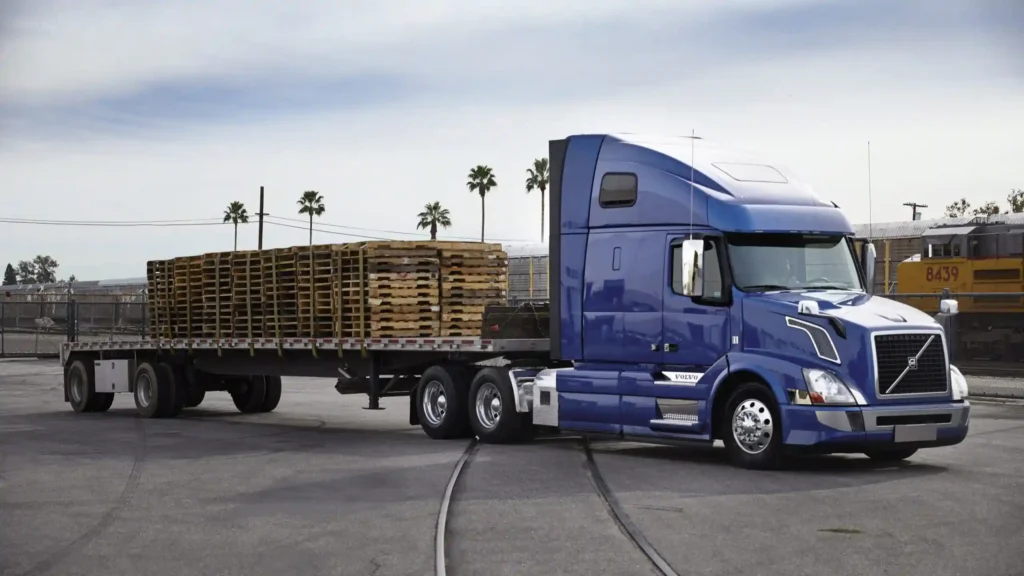
However, professional overweight permit services can be useful when a shipment:
- Crosses multiple states
- Crosses multiple provinces
- Is extremely heavy
- Requires special route approval
- Requires engineering review
- Is classified as a superload
- Needs multiple permits
- Requires special escorts
- Has complicated axle configurations
A permit service can assist with:
- Permit applications
- Route information
- Documentation
- State permits
- Provincial permits
- Overweight permit requirements
- Multi-jurisdiction coordination
This can reduce paperwork and help carriers avoid common administrative errors.
Overweight Permit Checklist
Before moving a heavy load, confirm each of the following:
- Gross vehicle weight
- Individual axle weights
- Axle group weights
- Axle spacing
- Number of axles
- Vehicle configuration
- Cargo description
- Divisible or non-divisible status
- Origin
- Destination
- Complete route
- State requirements
- Provincial requirements
- Bridge restrictions
- Construction restrictions
- Local road requirements
- Required permits
- Permit fees
- Travel dates
- Travel hours
- Escort requirements
- Load securement
- Driver documentation
- Special permit conditions
Frequently Asked Questions
What are the basic overweight permit requirements?
Common requirements include accurate gross weight, axle weights, axle spacing, vehicle configuration, cargo information, origin, destination, and route details. Exact requirements vary by jurisdiction.
How much weight requires an overweight permit?
There is no single USA-wide or Canada-wide threshold. The applicable limit depends on the state, province, road, vehicle configuration, axle group, and other rules.
Is 80,000 pounds always the maximum truck weight in the USA?
80,000 pounds is the standard federal gross vehicle weight limit for qualifying vehicles on the Interstate System, but exceptions, state rules, specific routes, and permit provisions can affect actual allowable weights.
Can I get an overweight permit for any heavy load?
Not necessarily. Permit eligibility depends on the jurisdiction and the type of load. Rules can be more restrictive for divisible loads than for qualifying non-divisible loads.
Do I need separate overweight permits for different states?
A multi-state trip may require separate permits because individual states issue oversize and overweight permits for movements within their jurisdictions.
Are overweight permits required in Canada?
They can be required when a vehicle or load exceeds applicable provincial or territorial weight limits. Canadian vehicle weight and dimension requirements are primarily handled at the provincial and territorial level.
Does an overweight permit allow me to use any road?
No. A permit can specify an approved route and other conditions. Local or municipal permission may also be required for some roads.
How long does an overweight permit take?
Processing times vary. Simple permits can be faster, while complex movements may require engineering, route, or infrastructure reviews. Ontario, for example, currently lists five business days for single-trip permits and longer processing for annual, project, and superload applications.
How much does an overweight permit cost?
The cost depends on the jurisdiction, weight, route, distance, permit type, and complexity of the shipment. There is no single overweight permit price for the USA or Canada.
Can an overweight load also be an oversize load?
Yes. A shipment can exceed both weight and dimensional limits. In that situation, the carrier may need authorization addressing both overweight and oversize conditions.
Conclusion
Understanding overweight permit requirements is essential for carriers moving heavy equipment, machinery, industrial cargo, and other large shipments across the USA and Canada.
The process starts with accurate information. Carriers need to know the gross vehicle weight, axle weights, axle spacing, vehicle configuration, cargo type, origin, destination, and planned route. They must then identify the requirements for every state or province involved.
In the United States, overweight permitting is primarily handled by individual states. In Canada, vehicle weight and dimension requirements are mainly controlled by provinces and territories.
For simple shipments, obtaining a permit may be straightforward. For multi-state or multi-province transportation, very heavy loads, non-divisible cargo, or superloads, the process can involve route reviews, engineering documents, special conditions, and additional approvals.
Using professional overweight permit services can help carriers manage applications, route information, documentation, and multi-jurisdiction requirements.
The key is to plan before the truck moves. Accurate weights, the correct permit, an approved route, proper load securement, and compliance with every permit condition can help keep a heavy haul shipment legal, safe, and on schedule.